
One Pot Spaghetti with Meat Sauce (Broken in Half, 40 Minutes)
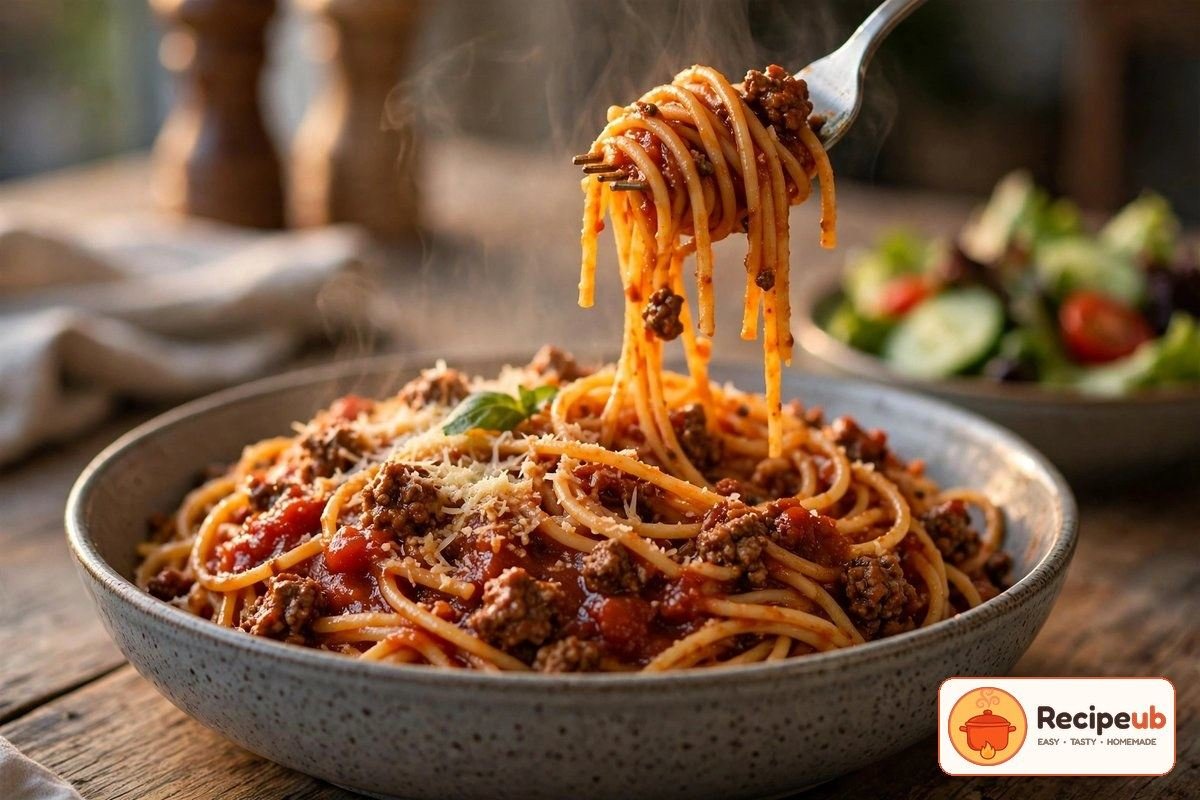
One pot spaghetti is the weeknight dinner the search box describes in its own completions: one pot spaghetti, one pot spaghetti with meat sauce, one pot spaghetti recipe with ground beef, how to cook spaghetti in one pot, how to cook pasta in one pot with sauce. Read those completions together and the searcher is asking a method question, not just a dinner question — how does dry pasta cook in a pot of sauce, and how much liquid does it actually take? Page 1 answers with specifics that cannot all be true at once. The added water runs from 2 cups to 4 cups for roughly the same pot; the tomato is counted as a 28-ounce can of crushed, a 28-ounce can of diced plus a 15-ounce can of sauce, or a 24-ounce jar of marinara; the pasta load runs from 8 ounces to 12; and the method splits clean down the middle — one famous build says cover it and do not open the lid for 17 to 20 minutes, while the jar build says stir often and carries a troubleshooting note for when the sauce soaks up and the pasta stays crunchy. This page prints the three systems the cluster leaves out: the Liquid Chart — every named card’s total liquid converted to ounces per ounce of pasta, with the working band and both failure ends; the Break Chart — halves vs thirds vs whole strands, decided by the width of your pot, with the first-two-minutes clumping rule; and the Beef Chart — the protein decision priced at November 2026’s near-record beef prices. The build itself: 1 pound of 90% lean ground beef crumbled and browned all the way to 160°F, a 28-ounce can of crushed tomatoes and 3¼ cups of water, and 12 ounces of spaghetti broken in half and cooked covered in the sauce for 12 minutes, stirred twice. Six servings at about 430 calories and ≈$2.00 a serving (both estimates, itemized on this page), in 40 minutes.
It also knows its nearest neighbor on this site, because this shelf already runs a ground-beef pasta. This post is the Italian meat-sauce build — spaghetti strands in a crushed-tomato sauce, Parmesan at the end, no cheese in the pot. If the beef pasta you want is the taco-spiced one, that is my one-pot taco pasta — the taco-seasoned ground beef and penne pot, taco seasoning and cheddar melted through; this post is the spaghetti build, Italian seasoning and a crushed-tomato meat sauce with no cheese in the pot. Same protein, same one-pot discipline — different pasta shape, different seasoning system, different sauce. And this build is meat sauce, not meatballs, on purpose: the beef is crumbled into the sauce, and the meatball version of this dinner is a different dish with its own seat (the FAQs below name it).
The short answer: Heat 1 Tbsp of olive oil in a large heavy pot and brown 1 lb of 90% lean ground beef, crumbled, for 7 minutes, all the way through to 160°F with no pink left. Cook 1 diced onion in the drippings 3 minutes; add 4 minced garlic cloves and 2 Tbsp of tomato paste for 1 minute. Pour in 1 (28 oz) can of crushed tomatoes and 3¼ cups of water with 1 tsp Italian seasoning, 1 tsp kosher salt, ½ tsp black pepper and ½ tsp sugar and bring to a boil, about 5 minutes. Press in 12 oz of spaghetti, broken in half, until submerged; cover, drop to medium-low, and cook 12 minutes — stir at minute 4 and again at minute 9. Off the heat, stir in ½ cup of grated Parmesan and rest 2 minutes — six servings at about 430 calories and ≈$2.00 each, in 40 minutes.
In This Recipe
The Plan at a Glance
- The beef: 1 lb ground beef, 90% lean, crumbled and browned all the way to 160°F BEFORE the pasta goes in — after that, the covered simmer is cooking pasta, not meat (the beef rule in the card notes)
- The liquid: 1 (28 oz) can crushed tomatoes + 3¼ cups water = 54 oz total = 4½ oz of liquid per ounce of pasta — the convergent band’s center (the Liquid Chart below)
- The pasta: 12 oz spaghetti (¾ of a standard 16 oz box), broken in half so it submerges at once in a standard pot (the Break Chart below)
- The method: covered, medium-low, 12 minutes — stir at minute 4 (unweld the strands while the starch wakes) and at minute 9 (check the liquid; a dry-looking pot gets ¼ cup of hot water — the liquid rule in the card notes)
- The pot: a large heavy Dutch oven or deep pot — a starch-thickening sauce scorches on a thin bottom (the heavy-pot rule in the card notes)
- The finish: heat OFF, ½ cup grated Parmesan stirred in, rest 2 minutes while the sauce finishes thickening on the pasta’s own starch; more Parmesan and basil or parsley at the table
- Time: 10 minutes prep / 30 minutes cook (beef 7 + onion and garlic/paste 4 + sauce to a boil 5 + pasta 12 with the two stirs + rest 2, stated openly) / 40 minutes total
- Yield: 6 servings (about 1¾ cups each)
- Calories: ≈430 per serving (estimate); protein ≈26 g per serving (estimate)
- Cost: ≈$2.00 per serving (estimate) at October 2026 prices — the beef line is the BLS-verified anchor and 57% of the batch; the swaps are priced in the Beef Chart below
- Storage: fridge 3 to 4 days; leftovers always need a splash of water at the reheat — the rules are in the Storage section below
Why This Recipe Works
The pasta drinks the sauce instead of plain water — that is the whole flavor argument. Boiled-and-drained spaghetti is cooked in water that gets thrown away, then sauced at the table. One-pot spaghetti cooks in the sauce itself, so every strand absorbs seasoned tomato as it softens, and the starch the pasta sheds on the way thickens the sauce around it — which is why this build needs no flour, no cream and no cheese in the pot to land glossy. The pasta is not a vehicle for the sauce here; it is an ingredient in it, and the liquid has to be measured like one.
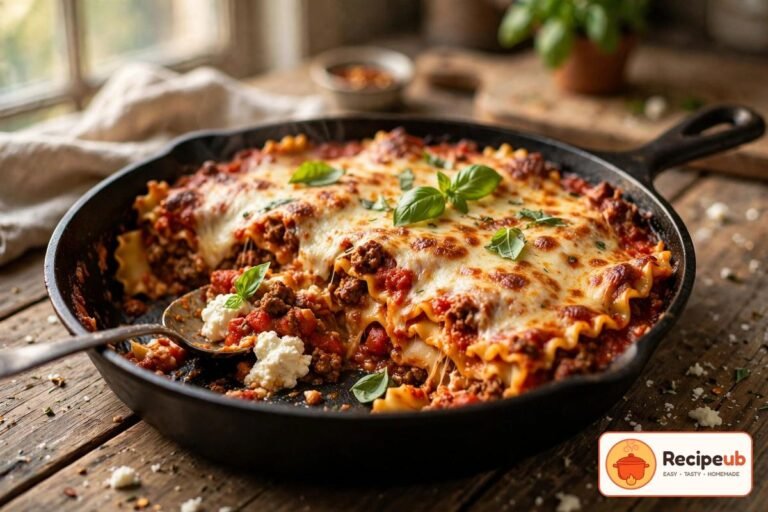
It is strands in sauce, not layers in a pan. This shelf already holds the architectural pasta: my skillet lasagna — the stovetop lasagna, whole noodles layered with ricotta in tomato sauce like a casserole’s strata; this post is loose spaghetti strands broken in half and stirred through a meat sauce until the pasta is the body of the dish builds its noodles like architecture — whole, flat, layered, sliced to serve. Spaghetti is the opposite system: the strands go in loose, they move, they stir, and they are served in a tangle, not a wedge. Layered vs loose is a different dish, and each page on this shelf says which one it is.
It is also the shelf’s beef-and-tomato pasta — not another creamy chicken one. Read this site’s pasta shelf in a row and the register is chicken and cream: a garlic cream chicken pasta, a Cajun cream chicken pasta, a sun-dried tomato cream chicken pasta, a chicken Alfredo, a lemon chicken orzo cooked like a risotto. Every one of them is a fine dinner, and none of them is this one. This build’s sauce is tomato, its protein is crumbled beef, and its only cheese is Parmesan stirred in off the heat — the lane page 1’s own stems ask for first (one pot spaghetti with meat sauce, recipe with ground beef), and the lane this site had not yet published.
The beef is browned all the way before the pasta — a safety fact that is also a method fact. Ground beef cooks to 160°F, and crumbles buried in a covered pasta simmer cannot be checked strand by strand at the end. So the beef is browned fully at the start — 7 minutes, crumbled small, no pink anywhere — and only then does the pot become a pasta pot. After that point the covered 12 minutes are cooking spaghetti, not meat, which is exactly why this build can print a calm stir schedule instead of a warning: the temperature work is already done, in the open, where it can be seen.
The stir is a schedule, not a superstition. Page 1 splits into two camps that are each half right. The do-not-open camp is protecting the steam and the liquid count — lift the lid constantly and the pot cools and dries. The stir-often camp is protecting the strands — dry spaghetti that touches as its starch wakes up welds into bundles, and a starch-thickening sauce scorches on the bottom if it never moves. This build prints the convergent middle as a rule: covered the whole 12 minutes, stirred exactly twice — at minute 4, while the strands are still separate-able, and at minute 9, when the liquid can be checked against the chart below and corrected with ¼ cup of hot water if the pot looks dry. Two stirs, each with a job. That is the whole disagreement, resolved into a timetable.
How Much Liquid Does the Pasta Need? The Liquid Chart
Here is the first chart this post exists to print. Ask how much water one pot spaghetti needs and every recipe answers with its own cup count and no context — while the cluster’s actual totals, once the tomato is counted honestly as the liquid it is, run from about 4.4 ounces of total liquid per ounce of pasta to about 7.4. Here they are, side by side, each row a named page-1 card’s printed amounts converted to the one unit that lets them be compared. This recipe uses the bold row.
| Whose card | Dry spaghetti | Tomato | Added liquid | Total liquid | Oz per oz of pasta | Method |
|---|---|---|---|---|---|---|
| Skinnytaste | 10 oz | 28 oz crushed | 2 cups water | 44 oz | 4.4 | Covered, do not open, 17–20 min |
| THIS RECIPE | 12 oz | 28 oz crushed | 3¼ cups water | 54 oz | 4.5 | Covered, stir at 4 and 9 min, 12 min |
| Pasta Nights (meatless) | 12 oz | 24 oz jar marinara | 4 cups water | 56 oz | 4.7 | Uncovered, stir every minute |
| Simply Scratch (beef + sausage) | 12 oz | 24 oz jar marinara | 4 cups broth | 56 oz | 4.7 | Lid askew, stir often |
| Valerie’s Kitchen (frozen meatballs) | 12 oz | 24 oz jar + 14.5 oz diced | 1½ cups broth + 1 cup water | 58.5 oz | 4.9 | Covered, stir occasionally |
| Kitchen Sanctuary (meatballs) | 7 oz | 14 oz chopped | 600 ml (2½ cups) water | ≈34.5 oz | 4.9 | Covered, tongs to separate |
| The Cozy Cook | 8 oz | 24 oz jar + 14.5 oz diced | 2½ cups broth | 58.5 oz | 7.3 | Partially covered — the wet end |
| Taste of Home | 8 oz | 28 oz diced + 15 oz sauce | 2 cups water | 59 oz | 7.4 | Sauce simmered first, pasta uncovered |
How to read the chart: count total liquid — the tomatoes plus the water — because the pasta cannot tell the difference, and neither can the pot. Read down the ratio column and the covered stovetop builds converge on about 4½ to 5 ounces per ounce of dry spaghetti: that is the band where the strands finish tender in a sauce that has thickened around them. The two 7-plus rows are not wetter cooks — they are smaller pasta loads carrying a full jar-and-can of tomato, an 8-ounce portion stretched under a 12-ounce portion’s sauce, which is why they eat saucy and loose. The failure ends are printed because they are the ways this dish actually goes wrong: under about 4 ounces per ounce, the strands finish crunchy in a sauce that has gone dry — it is the failure the jar build’s own troubleshooting note rescues with “add extra broth,” stated there without the starting number; and over about 5½, the pot eats like a soup with spaghetti in it, the strands swimming instead of glossed. This recipe’s 3¼ cups beside the 28-ounce can is the band’s center for 12 ounces — and the scaling rule travels with it: for a full 16 oz box, keep the same can and use 4⅓ cups of water (72 oz total, the same 4½ per ounce). Brands of crushed tomato vary by roughly ¼ cup of free water per can, which is what the 9-minute stir is for: a dry-looking pot at minute 9 gets that ¼ cup of hot water, and the chart’s band absorbs the difference.
This site learned the absorption discipline from rice before it ever printed it for pasta: my one-pot chicken and rice — the budget chicken and rice pot, where the rice cooks in a measured liquid and the ratio is the recipe; this post runs the same discipline on spaghetti, with the tomato counted as liquid and the ratio printed per ounce of pasta is built on the same rule — dry starch, seasoned liquid, a number instead of a hope. Rice taught the shelf that the liquid is an ingredient. The spaghetti chart is that lesson with the tomato counted.
Ingredients
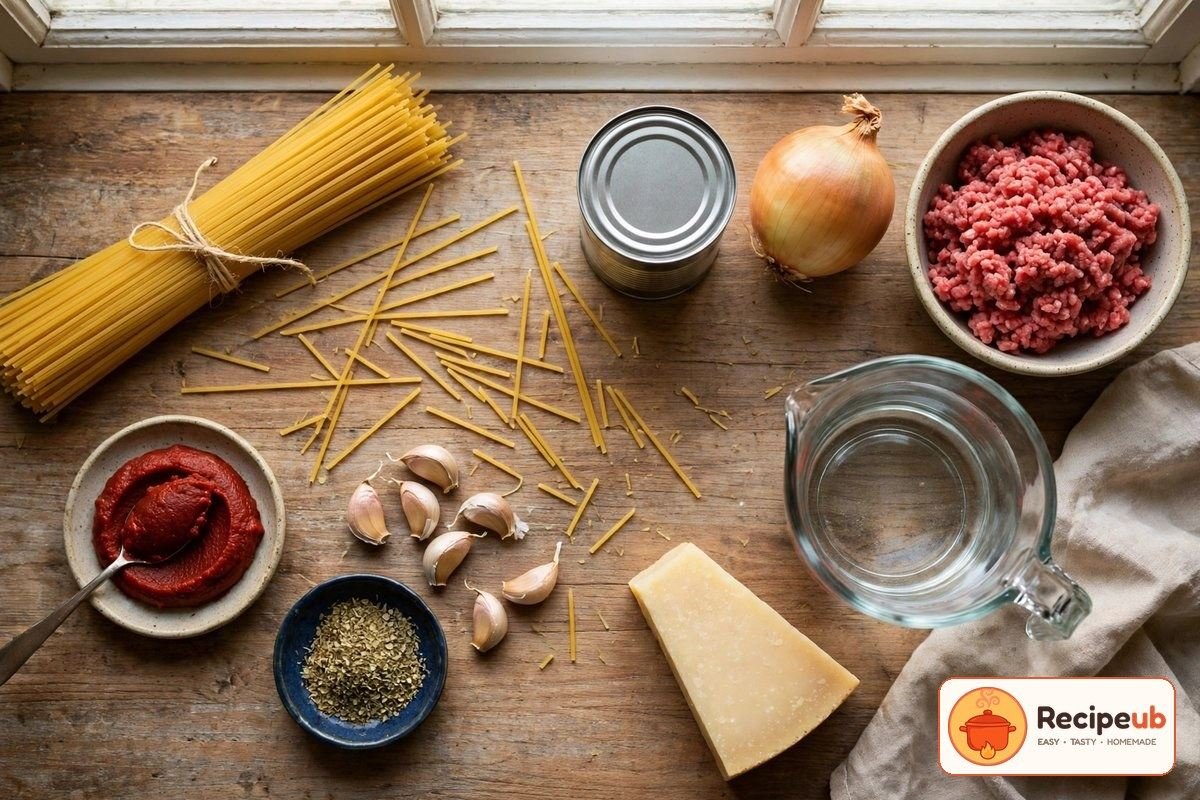
- 1 Tbsp olive oil
- 1 lb ground beef, 90% lean
- 1 medium yellow onion, diced
- 4 cloves garlic, minced
- 2 Tbsp tomato paste
- 1 tsp Italian seasoning
- 1 tsp kosher salt
- ½ tsp black pepper
- ½ tsp sugar
- Pinch of red pepper flakes (optional)
- 1 (28 oz) can crushed tomatoes
- 3¼ cups water
- 12 oz spaghetti, broken in half
- ½ cup grated Parmesan cheese, plus more for serving
- Fresh basil or parsley, for serving (optional)
Ingredient notes: The beef is 90% lean ground beef, 1 pound — lean enough to brown in the oil without a draining step, which keeps the drippings (and the onion’s start) in the pot; the 80/20 swap and the turkey swap are both printed in the Beef Chart below, with their method changes. The beef browns fully, to 160°F, before anything else joins it — that is the build’s one non-negotiable (the beef rule in the card notes). The tomatoes are one 28-ounce can of crushed tomatoes — and the sentence that sets up the Liquid Chart above is this one: the can is half the liquid. Crushed, not diced: diced tomatoes hold their pieces and their juice separately, while crushed tomatoes pour as a sauce and count as one. The water is 3¼ cups — not a round number, because the ratio is not round: 28 ounces of tomato plus 26 ounces of water is 54 ounces over 12 ounces of pasta, the chart’s 4½ per ounce. The spaghetti is 12 ounces — ¾ of a standard 16 oz box — broken in half; the full-box scaling is printed in the FAQs, and the break itself is the Break Chart below. The tomato paste is 2 tablespoons, toasted with the garlic for a full minute — it is the depth move the from-scratch builds share, the difference between a sauce that tastes canned and one that tastes cooked. The sugar is ½ teaspoon, printed honestly: it balances the canned tomato’s acidity, the institutional build’s trick, stated instead of hidden. The Parmesan is ½ cup, stirred in off the heat — it is a finish, not a sauce ingredient, and it goes in after the cooking is done so it melts into the gloss instead of clumping in the boil.
How to Make One Pot Spaghetti with Meat Sauce
The method runs in the order the charts assume: the beef browns completely and first, the sauce builds and comes to a boil, the pasta gets its covered 12 minutes with two scheduled stirs, and the Parmesan finishes it off the heat. It is the same covered-simmer pasta discipline as this shelf’s other one-pot pasta — my one-pot chicken fajita pasta — the fajita-spiced chicken and penne pot, chicken and peppers simmered covered in one pot; this post is the beef build, spaghetti in a tomato meat sauce with the liquid chart printed — with the protein, the shape and the sauce all swapped, and the liquid measured to the quarter cup. A large heavy Dutch oven or deep pot with a lid is the vessel; everything below happens in it.
- Brown the beef, all the way. Heat the olive oil in a large heavy Dutch oven or deep pot over medium-high heat. Add the ground beef and cook 7 minutes, breaking it into small crumbles with a spoon, until it is browned through with no pink left and the crumbles read 160°F. Do not rush this step and do not let the pasta anywhere near the pot yet — the beef’s cooking happens here, in the open, completely (the beef rule in the card notes). At 90% lean there is no fat worth draining; leave the drippings in the pot.
- Onion, then garlic and paste. Drop the heat to medium. Cook the onion in the drippings for 3 minutes, until softened at the edges. Add the garlic and tomato paste and cook 1 minute, stirring, until the paste darkens a shade — garlic and paste after the sear, never in it, so the garlic perfumes and the paste toasts instead of scorching.
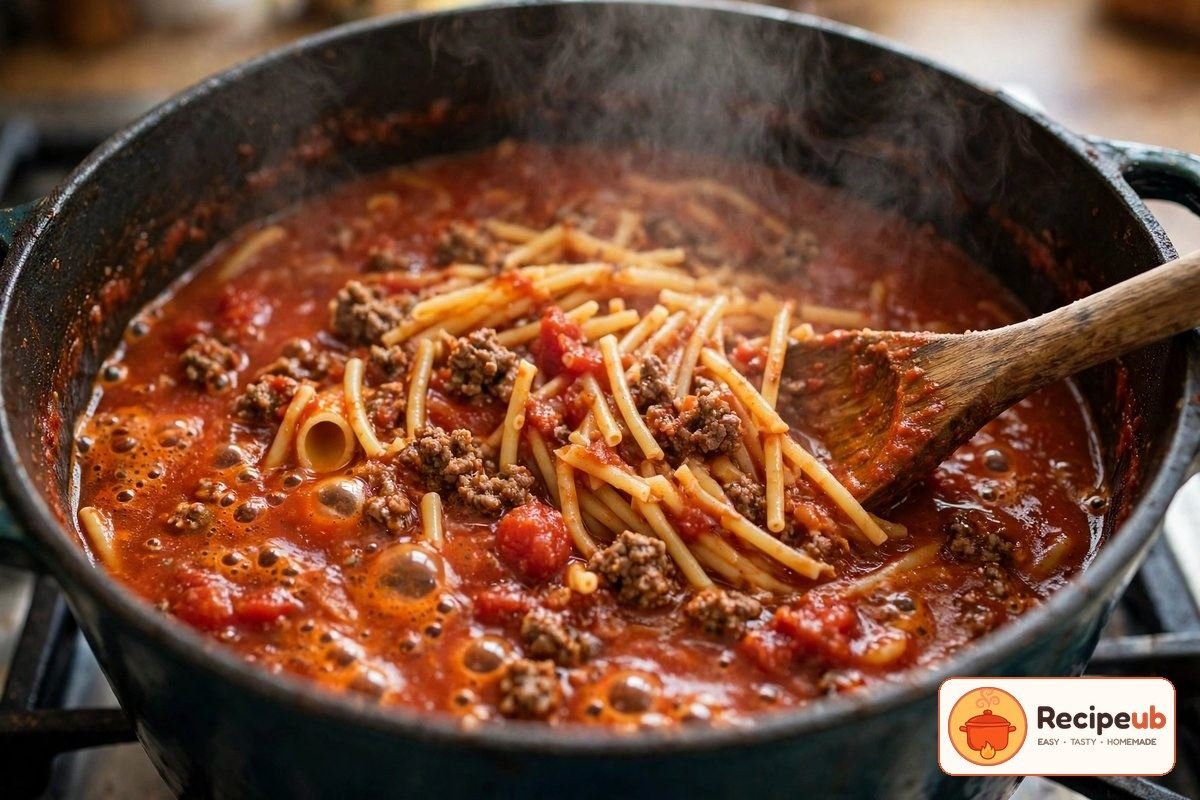
- Build the sauce and bring it to a boil. Pour in the crushed tomatoes and the water. Stir in the Italian seasoning, kosher salt, black pepper, sugar and the red pepper flakes if you are using them. Bring the pot to a boil, about 5 minutes — the spaghetti goes into sauce that is already boiling, never into a cold or warming pot, because the 12-minute count starts at a boil and the strands must begin drinking at full heat.
- Pasta in, lid on. Add the spaghetti halves a handful at a time, pressing them under the surface with a spoon or tongs until every strand is submerged — halves go under at once, which is the whole point of the break (the Break Chart below). Put the lid on, drop the heat to medium-low, and start the 12 minutes.
- Stir at minute 4. Lift the lid once and stir thoroughly, separating any strands that have started to hold hands — this is the unwelding stir, done while the starch is waking and the strands can still be parted easily. Lid back on.
- Stir at minute 9, and check the liquid. Stir again, and read the pot against the Liquid Chart: the sauce should be loose and glossy, coating the strands. If it looks dry — some cans of crushed tomato carry less free water than others — stir in ¼ cup of hot water. At 11 minutes, pull one strand and taste it: it should be just shy of tender, because the rest finishes it. At 12 minutes, turn the heat off.
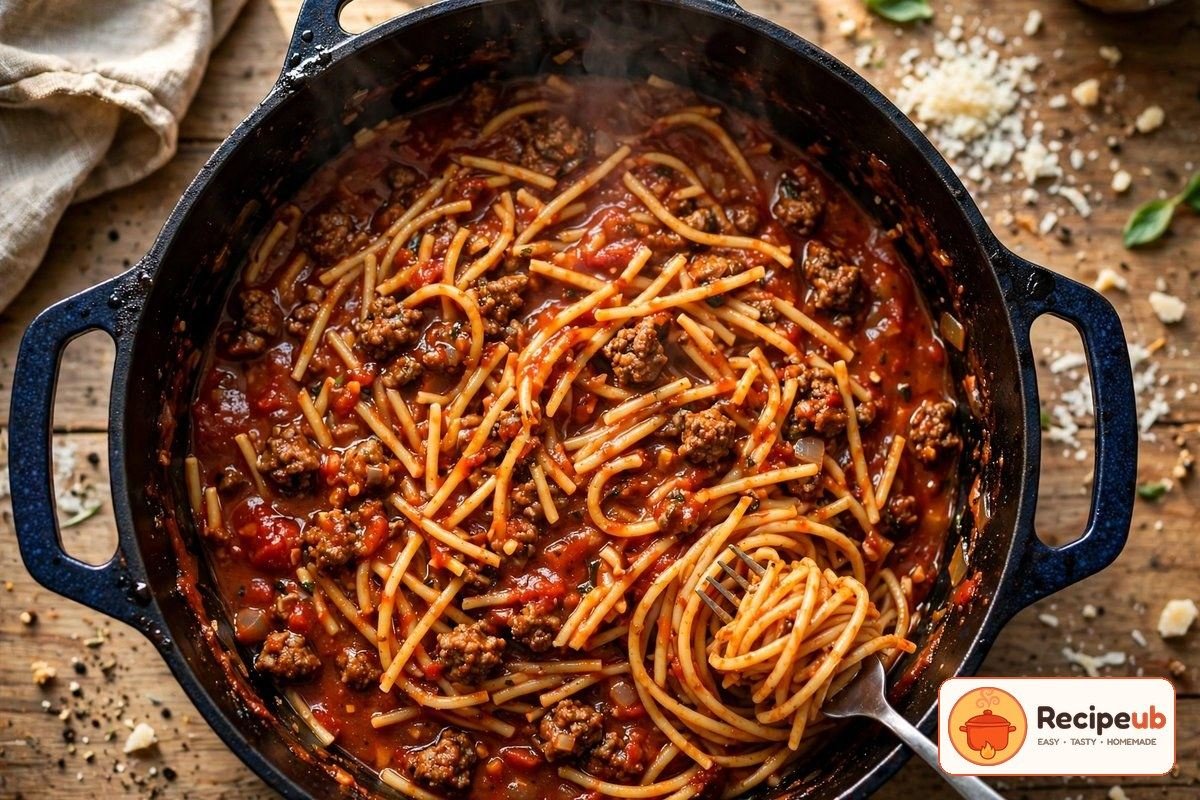
- Parmesan in, rest 2 minutes. Stir the Parmesan through the pot off the heat and let it stand 2 minutes — the sauce finishes thickening on the pasta’s own starch and turns glossy. Serve straight from the pot, with more Parmesan and the basil or parsley at the table.
One Pot Spaghetti with Meat Sauce (Broken in Half, 40 Minutes)
Ingredients
Equipment
Method
- Heat the olive oil in a large heavy pot over medium-high. Brown the ground beef 7 minutes, crumbled small, until cooked through to 160°F with no pink left.
- Cook the onion in the drippings 3 minutes. Add the garlic and tomato paste for 1 minute, until the paste darkens.
- Pour in the crushed tomatoes and water; stir in the Italian seasoning, salt, pepper, sugar and red pepper flakes. Bring to a boil, about 5 minutes.
- Press the spaghetti halves under the surface until submerged. Cover, drop to medium-low, and cook 12 minutes.
- Stir at minute 4 to separate the strands. Stir again at minute 9; if the pot looks dry, add ¼ cup of hot water. Pull a strand at 11 minutes — it should be just shy of tender.
- Heat off. Stir in the Parmesan and rest 2 minutes, until the sauce turns glossy. Serve with more Parmesan and basil or parsley at the table.
Notes
Do You Break the Spaghetti? The Break Chart
Here is the second chart, and it answers the question page 1 shrugs at. Six of the named cards break the spaghetti in half; one older build breaks it in thirds; two lay the strands in whole. The only reason any of them prints is submersion — “to be sure it’s submerged in the sauce; you can skip this step” — which is true and incomplete: the break is not a preference, it is a measurement, and it is decided by the width of your pot against the length of the strand. This recipe uses the bold row.
| Strand choice | Whose card | What it buys | What it costs |
|---|---|---|---|
| Broken in half | THIS RECIPE (also Taste of Home · Skinnytaste · Chelsea’s · Buns in My Oven · Valerie’s · Simply Scratch) | Submerges at once in a standard 10–12 inch pot; even cooking from minute one; no fanning, no pressing, no babysitting | No twirl — fork-length strands; the purist’s objection, answered below |
| Broken in thirds | An older Taste of Home fresh-tomato build | Fits a small saucepan | Spoon-length pieces — a different eating experience, closer to a pasta bake than a spaghetti dinner |
| Whole strands | Pasta Nights · The Cozy Cook | The full twirl; nothing broken | Needs a pot wider than the strand is long, or a fan-and-press as the ends soften (Pasta Nights) / tongs twisting the strands in (Cozy Cook) — and a stir inside the first 2 minutes, before the waking starch welds touching strands into a bundle |
How to read the chart: a dry spaghetti strand is about 10 inches long and rigid. Lay it whole across a standard 10-inch pot and its ends ride on the rim, out of the sauce, softening only as fast as the submerged middle can bend them down — which is why the whole-strand builds are full-attention builds: one stirs every minute, the other twists with tongs, and both are managing the same two minutes in which dry strands that touch as their surface starch wakes up weld into a bundle that no later stir fully separates. Halves delete the problem at the source: a 5-inch strand drops straight under the surface of any standard pot, cooks evenly from the first minute, and needs only the two scheduled stirs. The cost is real and it is printed rather than hidden: you give up the twirl. A half strand is fork-length, eaten in scoops and short winds rather than one long spiral — the Italian objection to broken spaghetti, and it is an objection about ceremony, not about cooking. This build’s answer is the chart itself: the pot decides. If the strand is longer than the pot is wide, break it in half. Whole strands are a wide-pot technique with a constant early stir — a legitimate choice for the cook who owns the wide pot and wants the twirl, not a virtue, and not a rule for the rest of us.
What Does the Pot Cost? The Beef Chart and The Priced Pot
Here is the third chart, and November 2026 is why it exists: the protein is the pot. Ground beef sits near its record — the Bureau of Labor Statistics’ October 2026 average is $6.755 a pound, against a series record of $6.923 set in August 2026 — and no page that ranks for this dish prints what its pot costs or admits how much of it is the beef. Here is the cluster’s protein decision, side by side, each row a named build’s printed choice with its method change and its price. This recipe uses the bold row.
| Protein | Whose build | Method change | Cost per serving |
|---|---|---|---|
| 90/10 ground beef, 1 lb | THIS RECIPE (Skinnytaste’s leanness; Taste of Home runs 95%) | Brown in the oil; no draining needed at 90% | ≈$2.00 (beef at the BLS October 2026 average) |
| 80/20 ground beef, 1 lb | Buns in My Oven · Get On My Plate | Brown, then spoon off or drain the rendered fat before the onion goes in | ≈$1.85 at a $5.99/lb store read (H-E-B, mid-November 2026 tracker — a dated store read, not the anchor) |
| Half beef + half Italian sausage | Simply Scratch · Get On My Plate | Brown both; the sausage carries the seasoning — halve the added salt | ≈$1.70 (sausage line a labeled shelf estimate) |
| Ground turkey, 1 lb | Skinnytaste’s Instant Pot build | Brown to 165°F — poultry’s number, not beef’s; the tomato paste earns its place, giving the color beef gives free | ≈$1.50 (labeled shelf estimate) |
| Meatless | Pasta Nights | No browning step; the garlic-and-flakes oil bloom carries the flavor; protein drops to ≈12 g a serving | ≈$0.85 |
| Frozen meatballs | Valerie’s Kitchen | A different dish — the meatballs cook in the sauce from frozen; this site’s meatball dinner lives elsewhere (the FAQs name it) | — |
And here is the whole pot, priced line by line at October 2026 prices — the beef line verified against the BLS, every other line labeled a shelf estimate, printed as one, because this page names its sources instead of rounding a receipt it never saw. It also reconciles: the method serves 6, and the table divides by the same 6.
| Line | Amount for the batch | Price basis | Batch cost |
|---|---|---|---|
| Ground beef, 90% lean | 1 lb | BLS October 2026 average, $6.755/lb (verified) | $6.76 |
| Crushed tomatoes | 1 (28 oz) can | Shelf estimate, labeled as one | ≈$1.85 |
| Parmesan cheese | ½ cup grated | Shelf estimate, labeled as one | ≈$1.10 |
| Spaghetti | 12 oz | Shelf estimate, labeled as one | ≈$0.80 |
| Yellow onion | 1 medium | Shelf estimate, labeled as one | ≈$0.60 |
| Olive oil, seasonings, sugar | Pantry amounts | Estimate, labeled as one | ≈$0.35 |
| Garlic | 4 cloves | Shelf estimate, labeled as one | ≈$0.25 |
| Tomato paste | 2 Tbsp | Shelf estimate, labeled as one | ≈$0.20 |
| Batch total | 6 servings | ≈$11.91 → ≈$2.00 per serving |
How to read the table: one line is the story — the beef is $6.76 of the $11.91, which is 57% of the pot — and at a near-record price that is the honest economics of spaghetti and meat sauce in November 2026: everything else in the pot together costs less than the beef does. The dated shelf reads soften it without changing it: a mid-November 2026 grocery tracker read Aldi 80/20 at $5.29/lb and H-E-B 80% lean at $5.99/lb (dated store reads, labeled as such — the anchor stays the BLS average), and wholesale relief at the grind level has not yet reached the retail shelf, which lags it. The chart’s exits are priced for the cook who wants one: the turkey row is the real saving (≈$1.50 a serving, same method, poultry’s temperature), the half-and-half sausage row buys flavor and a small discount at once, and the meatless row is the cheapest pot on the page at the cost of the protein. What none of the rows changes is the system: the liquid ratio, the break, the two stirs and the 40 minutes all hold under every protein on the chart.
Emma’s Tips for the Best One Pot Spaghetti
Use the heavy pot — it is a rule, not a preference. A covered pot of tomato sauce thickening with pasta starch scorches from the bottom up, and it scorches fastest on a thin pot, where the burner heat lands in spots. A heavy Dutch oven spreads the heat across the whole base, which is why the cluster’s own warning about burning lives in a parenthesis about pot weight. Heavy pot, medium-low under the lid, two stirs — that combination is the entire anti-scorch system.
Break the spaghetti over the pot, in a towel if you are tidy. Halves occasionally shed a short shard when they snap; breaking the bundle inside a folded kitchen towel keeps every piece accounted for, and breaking directly over the sauce means the shards land in dinner instead of on the stove. Break the whole bundle before the sauce boils — it is prep work, and the 10 prep minutes already count it.
Pull a strand at 11 minutes, not at 12. The pasta finishes in the 2-minute rest, in a sauce that is still at a near-simmer, so the strand you taste at minute 11 should be just shy — a whisper of chew left at the center. A strand that tastes perfect at 11 is overdone at the table; a strand that tastes perfect at 12 was already done at 11. The doneness test is a strand and a bite, not the clock alone — brands vary, and thin spaghetti runs 2–3 minutes faster than regular (below).
Know your strand’s clock before you start. This build is timed on regular spaghetti. Thin spaghetti (spaghettini) cooks 2–3 minutes faster — pull the first test strand at 9 minutes instead of 11 — and whole wheat spaghetti (the institutional build’s choice) drinks slightly more liquid and wants the full stir discipline: add the ¼ cup of hot water up front, with the rest of the water, rather than waiting for the 9-minute check.
Stir like you mean it at minute 4 — and only then. The 4-minute stir is a separation, not a swirl: get the spoon to the bottom, lift the strands, and turn them over, so no two strands spend the next eight minutes pressed together. Then put the lid back and leave the pot alone until minute 9. Stirring constantly out of nervousness cools the pot, sheds the steam the count depends on, and breaks the strands you just carefully halved — the schedule is two stirs because two stirs is what the dish needs.
Storage and Reheating
Fridge: Leftovers keep 3 to 4 days at 40°F or below — the USDA leftover standard every recipe on this site prints. Refrigerate within 2 hours, in a shallow covered container. One honest texture note, printed because it decides when to eat what: the strands keep drinking the sauce as the pot sits, so day-one leftovers are the sauciest and day-three portions are thicker, softer and closer to a baked-pasta spoon than to the first night’s glossy tangle. That is absorption, not spoilage — and the reheat below is built for it.
Reheating: Covered, always — on the stove over medium-low in a pot with its lid, or in the microwave under a cover — with a splash of water stirred in first (about 1 tablespoon per serving), until steaming hot throughout (165°F). Add the splash before the heat, not after: it is the liquid the strands drank in the fridge, handed back, and it loosens the sauce as it warms instead of leaving the pasta to fry in its own starch. Loosen the strands gently with a fork as they warm — cold spaghetti reheats in the shape of its container if nobody separates it — and stop as soon as it is hot; every extra minute is another minute of the strands softening.
Freezer: This dish freezes acceptably for 2 to 3 months — the sauce and beef come back exactly as they went in, and the spaghetti comes back softer, stated rather than hidden: a strand that has been frozen in sauce has no chew left to defend, and it reheats as a soft, saucy bowl rather than a tangle. Thaw overnight in the fridge and reheat with the splash, as above. For a freezer-first cook, the better path is the enchilada post’s trick in reverse: freeze the meat sauce on its own (it keeps the same 2 to 3 months), and at the reheat, bring it to a boil, add the water back to the chart’s ratio, and cook fresh spaghetti halves in it for the same 12 minutes. The pasta is the cheapest line on the receipt and the one part of the dish that cannot be frozen back to life — so the freezer version simply cooks it fresh, and eats like the original.
FAQs
Do you have to break spaghetti in half for one pot spaghetti?
No — and yes, depending on your pot. The rule is the Break Chart above: if the strand is longer than the pot is wide, break it in half. A dry strand is about 10 inches; in a standard 10–12 inch pot, halves submerge at once and cook evenly from the first minute, while whole strands ride on the rim, soften unevenly, and need a fan-and-press plus a stir inside the first two minutes to keep them from welding together. Whole strands are a wide-pot technique — two page-1 builds cook them that way, with constant early attention. What you give up with halves is the twirl; what you get back is a pot you can cover and leave to its two scheduled stirs.
How much water do you need for one pot spaghetti?
Count total liquid — tomatoes plus water — at about 4½ ounces for every ounce of dry spaghetti. For this build that is the 28-ounce can of crushed tomatoes plus 3¼ cups of water for 12 ounces of pasta (54 ounces total). The full spread across page 1 is the Liquid Chart above: the covered builds converge on 4½–5 per ounce. To scale this recipe to a full 16 oz box, keep the same 28-ounce can and raise the water to 4⅓ cups (72 ounces total — the same ratio). And if your can of crushed tomatoes runs watery or dry, the correction is small and printed on the card: ¼ cup of hot water at the 9-minute stir, in or out.
Why is my one pot spaghetti crunchy — or soupy?
Those are the two ends of the Liquid Chart, and both are ratio problems, not effort problems. Crunchy means the pot ran under about 4 ounces of liquid per ounce of pasta — the strands drank everything available and still had dry centers, the exact failure one top holder’s troubleshooting note rescues with “add extra broth.” The fix next time is the ratio; the fix this time is ¼ cup of hot water, a lid, and 2 more minutes. Soupy means the pot ran over about 5½ per ounce — usually a small pasta load under a full jar-and-can of tomato, the chart’s 7-plus rows — and the fix is the opposite: lid off for the last few minutes and let the sauce reduce, then the 2-minute rest, which thickens more than it looks like it will.
Do you stir one pot spaghetti, or leave the lid on and walk away?
Neither extreme — covered, with two scheduled stirs. Page 1 splits between a do-not-open build (17–20 minutes, lid never lifted) and stir-often builds, and each is protecting something real: the lid protects the steam and the liquid count, the stirring protects the strands from welding and the bottom from scorching. This build’s rule takes both halves: keep the lid on for the whole 12 minutes, stir at minute 4 to separate the strands while their starch is waking, and stir at minute 9 to check the liquid against the chart. A heavy pot is the third leg of the rule — a starch-thickening sauce scorches on a thin bottom no matter how it is stirred.
Can I use a jar of marinara instead of the crushed tomatoes?
Yes — it is the cluster’s shortcut lane, and the swap is printed exactly. A 24 oz jar of marinara replaces the can of crushed tomatoes, the tomato paste and the sugar (the jar already carries all three), the added salt and Italian seasoning drop to a pinch (the jar is seasoned), and the water moves to about 3½ cups to hold the same band — 24 ounces of jar plus 28 of water is 52 ounces over 12 of pasta, just under this build’s 4.5. What changes is the flavor’s depth: the from-scratch build’s toasted paste and raw crushed tomato read brighter and less sweet than most jars. Same ratio, same break, same two stirs.
Can I make one pot spaghetti with ground turkey or Italian sausage?
Both, and the Beef Chart above prices them. Ground turkey browns exactly like the beef but to 165°F — poultry’s temperature, not beef’s 160°F — and it is the cheaper pot at about $1.50 a serving (a labeled shelf estimate); stir the tomato paste in with extra care, because it supplies the deep color beef gives the sauce for free. Italian sausage works best as the half-and-half build two page-1 holders print: ½ pound of beef and ½ pound of sausage, browned together, with the added salt halved because the sausage brings its own — about $1.70 a serving, and the richest sauce on the chart. Neither swap touches the liquid ratio, the break or the timing.
What temperature should the ground beef reach?
160°F — the USDA temperature for ground beef, and this build reaches it at the browning step, before the pasta goes in. That ordering is the method, not a shortcut around it: crumbles distributed through a covered pasta simmer cannot be checked piece by piece at the end, so the beef is cooked completely at the start — 7 minutes, crumbled small, no pink anywhere — and the covered 12 minutes that follow are a pasta cook, not a meat cook. (Ground turkey, if you swap it in, is poultry: its number is 165°F, reached the same way, at the same step.)
Can I make it with meatballs instead?
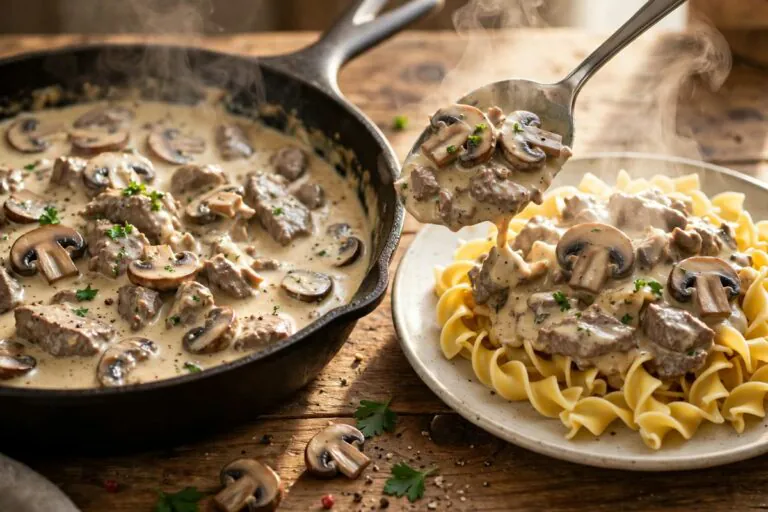
You can — and it is a different dish, which is why this page does not print it as a variation. The meatball version of this cluster cooks formed meatballs in the sauce — frozen ones simmered in jar marinara on the shortcut builds, from-scratch ones browned first on the others — and formed meat changes everything downstream: the browning, the liquid the meat releases, the serving, the leftovers. On this site, the meatball dinner already has its own post: my swedish meatballs — the from-scratch meatball dinner, formed beef-and-pork meatballs in a cream sauce; this post is the crumbled-beef build, the meat cooked into a tomato sauce with no formed meat anywhere. This post is the meat-sauce build — the form the search box’s own completions ask for first, and the one whose beef disappears into the sauce instead of sitting on top of it.
How long do leftovers keep, and how do I reheat them?
3 to 4 days in the fridge at 40°F or below, refrigerated within 2 hours — the USDA leftover standard, with the honest rider that the strands keep drinking the sauce as they sit, so leftovers get thicker and softer by the day. Reheat covered to 165°F with a splash of water (about 1 tablespoon per serving) stirred in first; the splash hands back the liquid the pasta absorbed. It freezes acceptably for 2 to 3 months, with the strands coming back softer — the better freezer path is to freeze the meat sauce alone and cook fresh spaghetti halves in it at the reheat. The full rules are in the Storage section above.
Why did my spaghetti clump together — or stick to the bottom?
Two different failures with two different clocks. Clumping happens in the first two minutes: dry strands that touch as their surface starch wakes up weld into a bundle, and no stir at minute 10 fully separates a weld set at minute 2. Halves submerged at once (the Break Chart) plus the 4-minute stir — a real separation, spoon to the bottom, strands lifted and turned — is the prevention; it is a schedule, not a rescue. Sticking and scorching happen at the bottom, across the whole cook: a starch-thickening tomato sauce settles and burns in spots on a thin pot, which is why the heavy-pot rule is on the card. If a few strands do weld, fish the bundle out at the 9-minute stir, tease it apart with two forks in the sauce, and put it back — inside the covered 12 minutes, it will finish with the rest.
Final Thoughts
One pot spaghetti is not a complicated dinner, and it is an oddly unmeasured one anyway — because the recipe was never the problem. It is a pound of beef, a can of tomatoes and three-quarters of a box of spaghetti. The problem is that page 1 prints it as a pile of incompatible specifics: 2 cups of water here, 4 there; a lid you must never lift on one page, a spoon you must never rest on another; a break in the strand that six recipes perform and none explains; and a pot whose cost — in the month beef sits near its record — nobody prints at all. What this page adds is the paperwork the other versions leave out: a liquid chart that converts every holder’s pot to one honest unit and names the band and both its failure ends, a break chart that turns a shrug into a measurement your own pot makes, a stir rule stated as a timetable instead of a camp, and a beef chart that prices the protein decision in the month it actually costs what it costs. Beef browned all the way, the tomato counted as liquid, halves in a heavy pot, two stirs, Parmesan off the heat: that is the deal.
More Easy One-Pot Dinners
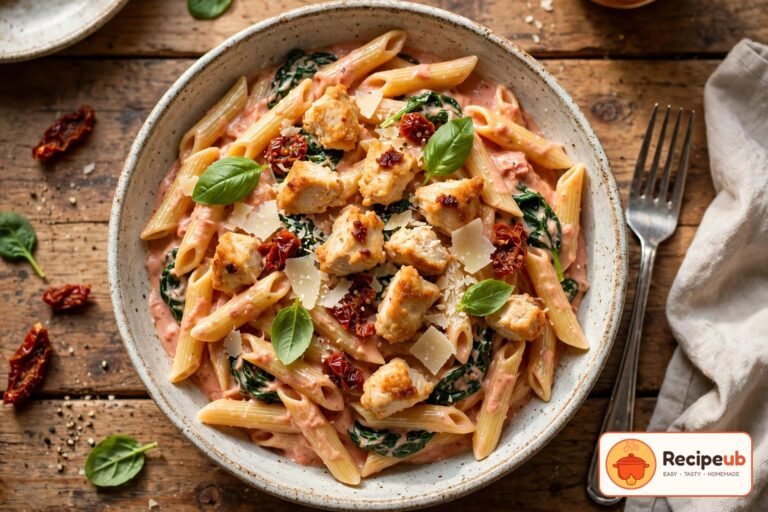
If a measured one-pot system is your kind of cooking, the rest of this shelf runs on the same rules — every ratio printed, every difference named. For the creamy end of the pasta shelf, my marry me chicken pasta — the sun-dried tomato cream chicken pasta, the shelf’s creamy lane with the sauce built on cream; this post is the tomato lane, beef and crushed tomato with no cream anywhere runs the same one-pot discipline on the opposite sauce family, and for the shelf’s other ground-beef one-pot, my homemade sloppy joes — the stovetop ground beef classic, crumbled beef in a sweet-tangy sauce served on buns; this post spends the same pound of beef in a pot of spaghetti instead of on a bun proves the same protein runs two completely different weeknight systems depending on what shares its pot. One shelf, one standard — the beef browns, the strands break, the liquid is measured, and dinner is handled.



Never Run Out of Dinner Ideas
One easy air fryer or slow cooker dinner in your inbox every week. No spam, ever.
You’re on the list — welcome to Recipeub!