
Tuna Noodle Skillet (Creamy, No Canned Soup, 30 Minutes)
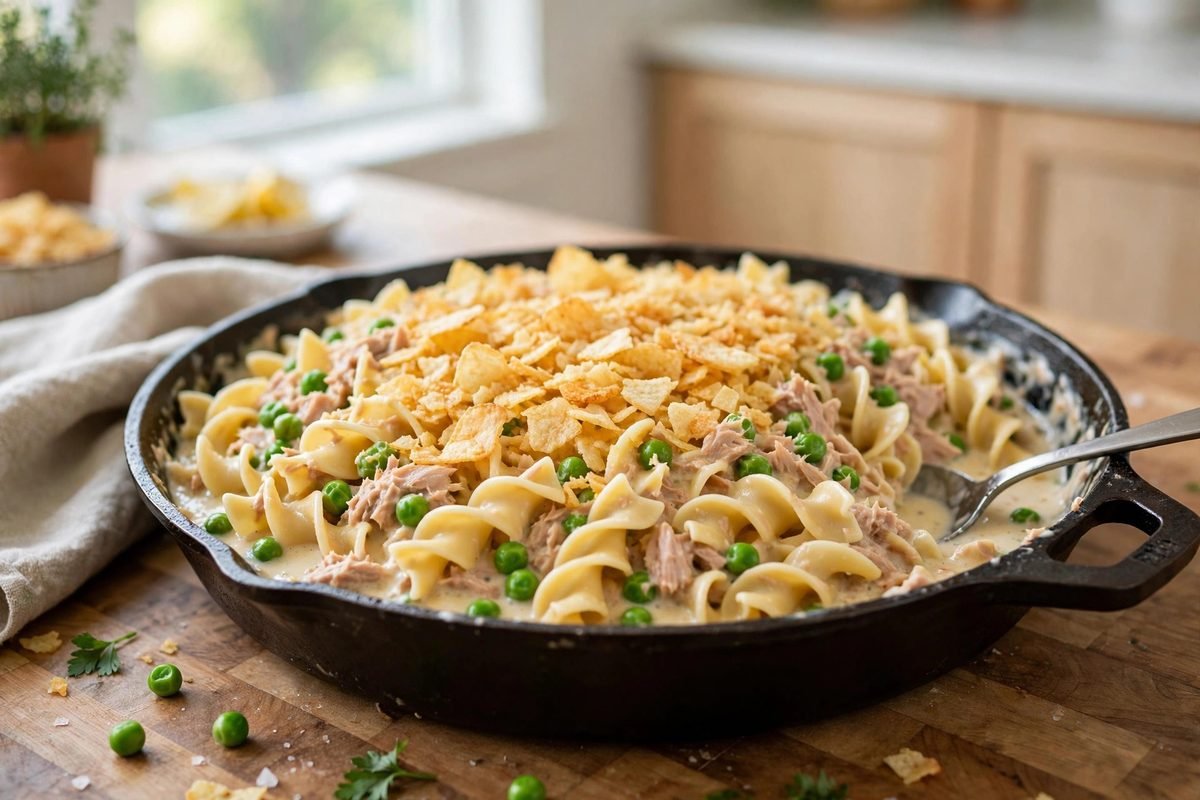
Tuna noodle casserole is one of those dinners that lives in everybody’s childhood — and the classic version asks for a can of condensed soup, a separate pot for the noodles, a casserole dish, and an oven. This tuna noodle skillet keeps everything people actually love about it (the creamy sauce, the tender egg noodles, the sweet peas, the crunchy topping) and removes everything else. One pan, on the stove, in about 30 minutes.
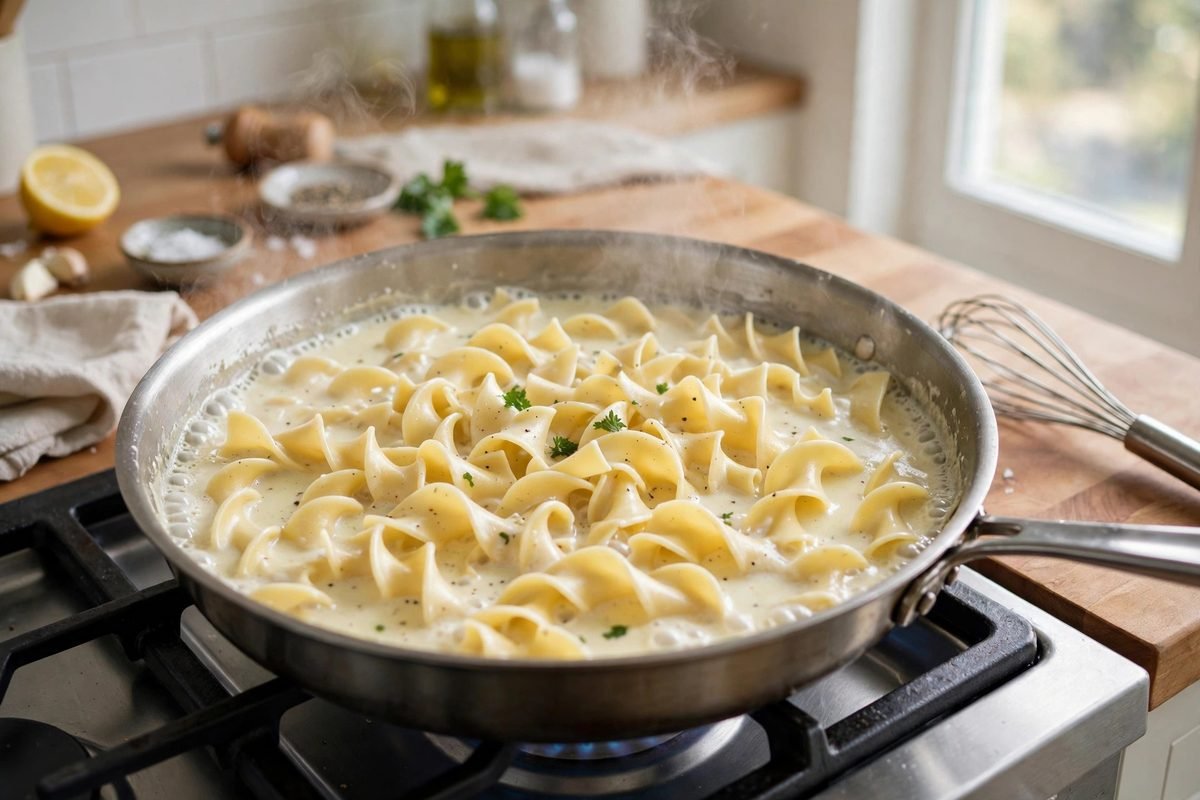
The sauce is the upgrade that matters. Instead of canned soup, you make a quick two-minute roux — butter, flour, broth, milk — that tastes like actual food and lets you control the salt, which matters because canned tuna brings plenty of its own. The noodles cook right in that sauce, drinking it up as they soften, so the finished skillet is creamy in a way the assemble-and-bake version rarely manages.
In This Recipe
Why This Recipe Works on a Weeknight
- No canned soup, no apologies. A simple roux-based sauce replaces the condensed soup — fresher flavor, less sodium, and it takes 2 extra minutes.
- The noodles cook in the sauce. No second pot, no draining, and the noodle starch helps the sauce turn silky as everything simmers together.
- Pure pantry cooking. Two cans of tuna, dried noodles, frozen peas — this dinner can happen weeks after your last grocery run.
- The crunch survives. The crushed potato chip topping goes on at the table, so it stays crisp instead of steaming soft in an oven.
Ingredients
- 2 tablespoons unsalted butter
- 1 small yellow onion, finely diced (about 1 cup)
- 2 celery stalks, diced (optional, but classic)
- 2 cloves garlic, minced
- 3 tablespoons all-purpose flour
- 2 cups low-sodium chicken broth
- 1 1/2 cups whole milk
- 12 oz wide egg noodles, uncooked
- 1 teaspoon Dijon mustard (optional, but it quietly brightens everything)
- 1/2 teaspoon kosher salt, plus more to taste
- 1/2 teaspoon black pepper
- 1 cup frozen peas
- 2 (5 oz) cans solid white tuna in water, drained
- 3/4 cup shredded cheddar cheese
- 1 cup crushed potato chips, for topping (plain or ruffled)
Ingredient notes: Solid white albacore tuna holds its chunky texture in the sauce; chunk light tuna is cheaper and works, but breaks down more, so fold it in extra gently. Drain the tuna well — the liquid in the can is the fastest way to make the sauce fishy and thin. Wide egg noodles are the classic choice and cook in the sauce in about 8–10 minutes; medium shells or rotini can substitute, with a couple of extra minutes. For the topping, ruffled chips crush into sturdier crumbs; buttered panko toasted in a dry pan is the other classic option.
How to Make Tuna Noodle Skillet
- Soften the onion. Melt the butter in a large, deep skillet over medium heat. Add the onion (and celery, if using) and cook for 3–4 minutes, until softened. Stir in the garlic and cook for 30 seconds.
- Make the roux. Sprinkle the flour over the vegetables and stir constantly for 1 minute — it should smell faintly nutty, not raw. This is the entire “no canned soup” technique, and you just did it.
- Build the sauce. Pour in the chicken broth slowly, whisking as you go to keep it smooth, then whisk in the milk. Add the Dijon, salt, and pepper. Bring to a gentle boil, whisking now and then, until the sauce thickens slightly, about 2–3 minutes.
- Cook the noodles in the sauce. Stir in the dry egg noodles, making sure they are mostly submerged. Cover, drop the heat to a low simmer, and cook for 8–10 minutes, stirring once or twice, until the noodles are just tender. They will look saucy — that is right; they keep absorbing as they sit.
- Fold in tuna, peas, and cheese. Add the peas and stir for 1 minute. Then fold in the tuna, breaking it into large chunks rather than shredding it, and stir in the cheddar until melted, about 1–2 minutes more, just until everything is heated through. Taste and adjust the salt — tuna brands vary a lot.
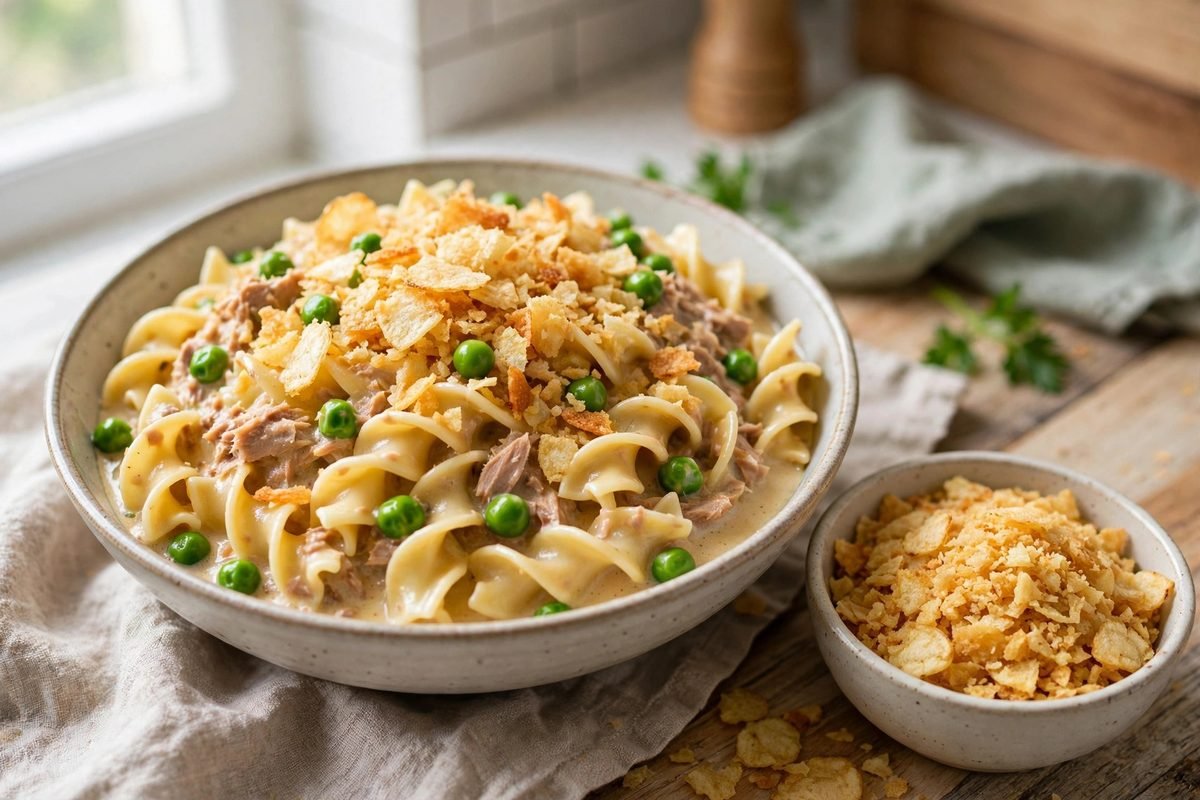
- Top and serve immediately. Spoon into bowls and shower each serving with crushed potato chips at the table. The chips start softening the moment they land, so this is a serve-it-now dinner.
Timing guide: Check the noodles at 8 minutes, not 10. Egg noodles go from tender to mushy quickly, and they continue to drink up sauce off the heat. If the skillet ever looks too thick, a splash of milk loosens it in seconds; too thin, two uncovered minutes of simmering fixes it.
Tuna Noodle Skillet
Ingredients
Equipment
Method
- Soften the onion. Melt the butter in a large, deep skillet over medium heat. Add the onion (and celery, if using) and cook for 3-4 minutes, until softened. Stir in the garlic and cook for 30 seconds.
- Make the roux. Sprinkle the flour over the vegetables and stir constantly for 1 minute — it should smell faintly nutty, not raw. This is the entire “no canned soup” technique, and you just did it.
- Build the sauce. Pour in the chicken broth slowly, whisking as you go to keep it smooth, then whisk in the milk. Add the Dijon, salt, and pepper. Bring to a gentle boil, whisking now and then, until the sauce thickens slightly, about 2-3 minutes.
- Cook the noodles in the sauce. Stir in the dry egg noodles, making sure they are mostly submerged. Cover, drop the heat to a low simmer, and cook for 8-10 minutes, stirring once or twice, until the noodles are just tender. They will look saucy — that is right; they keep absorbing as they sit.
- Fold in tuna, peas, and cheese. Add the peas and stir for 1 minute. Then fold in the tuna, breaking it into large chunks rather than shredding it, and stir in the cheddar until melted, about 1-2 minutes more, just until everything is heated through. Taste and adjust the salt — tuna brands vary a lot.
- Top and serve immediately. Spoon into bowls and shower each serving with crushed potato chips at the table. The chips start softening the moment they land, so this is a serve-it-now dinner.
Notes
A Pantry Dinner That Costs Very Little
This is one of the cheapest hot dinners on the whole site, which is exactly what tuna noodle anything has always been for. Two cans of tuna, a bag of egg noodles, frozen peas, milk, and butter — at typical grocery prices the whole skillet works out to roughly $1–2 a serving, and most of it comes from the pantry and freezer rather than a special shopping trip. It is the dinner I point to when someone says budget cooking means sad cooking: creamy, crunchy, and comforting is a strange definition of sad.
Tips and Variations
- Keep the tuna in chunks. Drain it, tip it in, and fold — do not stir it like you mean it. Big flakes of tuna are the difference between a tuna skillet and a fishy pasta.
- Mushroom version: Slice 8 oz of mushrooms and cook them with the onion until they give up their liquid and brown a little. It is the most-requested variation and tastes like the casserole’s fanciest form.
- Panko topping instead of chips: Toss 3/4 cup panko with 1 tablespoon of melted butter, toast in a dry skillet until golden, and sprinkle over. More delicate crunch, same idea.
- A squeeze of lemon at the end wakes up the whole pan — 1–2 teaspoons of juice or a little zest, stirred in with the cheese. Old-school tuna casserole never had it; it should have.
- Serve it the moment it is done. This is the one skillet dinner that does not hold well on the stove — the noodles keep drinking the sauce. If you must wait, keep extra milk at the ready for the rescue splash.
FAQs
How do you make tuna noodle skillet without canned soup?
With a roux — the same technique behind every cream sauce. Melt butter, stir in flour for a minute, then whisk in broth and milk and simmer until it thickens. It takes about 5 minutes total, tastes fresher than condensed soup, and lets you control the salt, which matters because the tuna is already salty.
What kind of tuna is best for tuna noodle skillet?
Solid white albacore packed in water. It holds together in meaty chunks and has a mild flavor that suits the cream sauce. Chunk light tuna is the budget option and is fine — just drain it very well and fold it in gently at the end so it does not disappear into the sauce.
Why did my noodles come out mushy?
They cooked a little too long, or sat in the hot sauce too long before serving. Egg noodles are thin and fast — start checking at 8 minutes and pull the pan while they still have a slight bite. And serve promptly: in a one-pan noodle dish, the noodles never really stop cooking in that hot sauce.
Can I bake this like a regular tuna casserole?
Yes. Make the skillet as written (an oven-safe pan helps), top with the chips or buttered panko plus an extra handful of cheddar, and bake at 375°F for 15–20 minutes until bubbling at the edges. The stovetop version is faster and creamier; the baked version gives you the browned, classic top.
How long do leftovers keep, and can I freeze it?
Leftovers keep 3 days in the fridge and reheat best on the stove with a splash of milk to bring the sauce back. Freezing is not recommended — cream sauces tend to separate and go grainy after thawing, and the noodles turn soft. Add fresh crushed chips when serving leftovers; the original topping will have gone soft.
What vegetables can I add to tuna noodle skillet?
Mushrooms and celery are the classics (see the tips above). Sweet corn, diced carrots (add them with the onion so they soften in time), or a handful of spinach stirred in at the end all work. Keep the total additions modest — the sauce quantity is balanced for the noodles, peas, and tuna.
Final Thoughts
Tuna noodle skillet is proof that the dinners we grew up on were onto something — they just needed a better sauce and one less pot. Creamy, crunchy, pantry-cheap, and on the table in half an hour, it is the kind of recipe that rescues the nights when the fridge is empty and nobody is excited about cooking. Keep tuna and egg noodles in the pantry, and this one is always available.
More Easy Budget Skillet Dinners
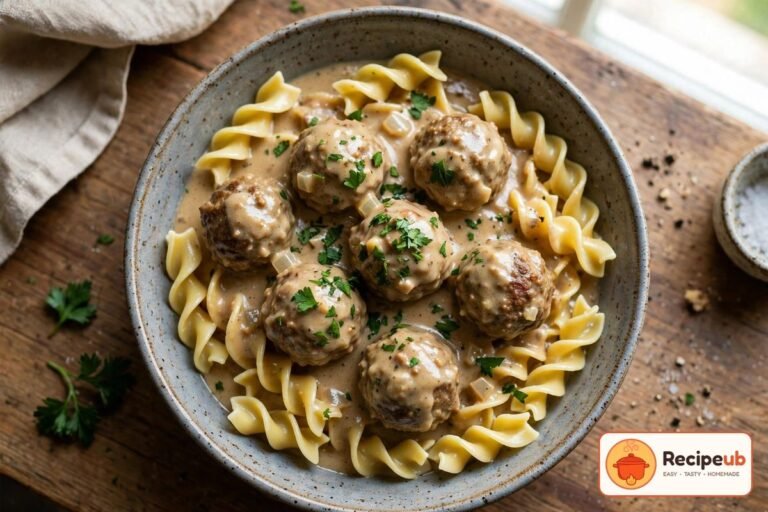
For another creamy noodle comfort dinner, our Slow Cooker Ground Beef Stroganoff and its weeknight cousin, the 5-Ingredient Beef Stroganoff Skillet, are the ones to try. The 5-Ingredient Ground Beef Skillet is another pantry-friendly one-pan save, our Slow Cooker Freezer Dump Meals are built for the same stock-the-freezer thinking, and Cheap Chicken Thigh Dinners rounds up more proof that a tight budget and a good dinner are not opposites.


Never Run Out of Dinner Ideas
One easy air fryer or slow cooker dinner in your inbox every week. No spam, ever.
You’re on the list — welcome to Recipeub!