
One-Pot Taco Pasta (Ground Beef, Cheesy, 30 Minutes)
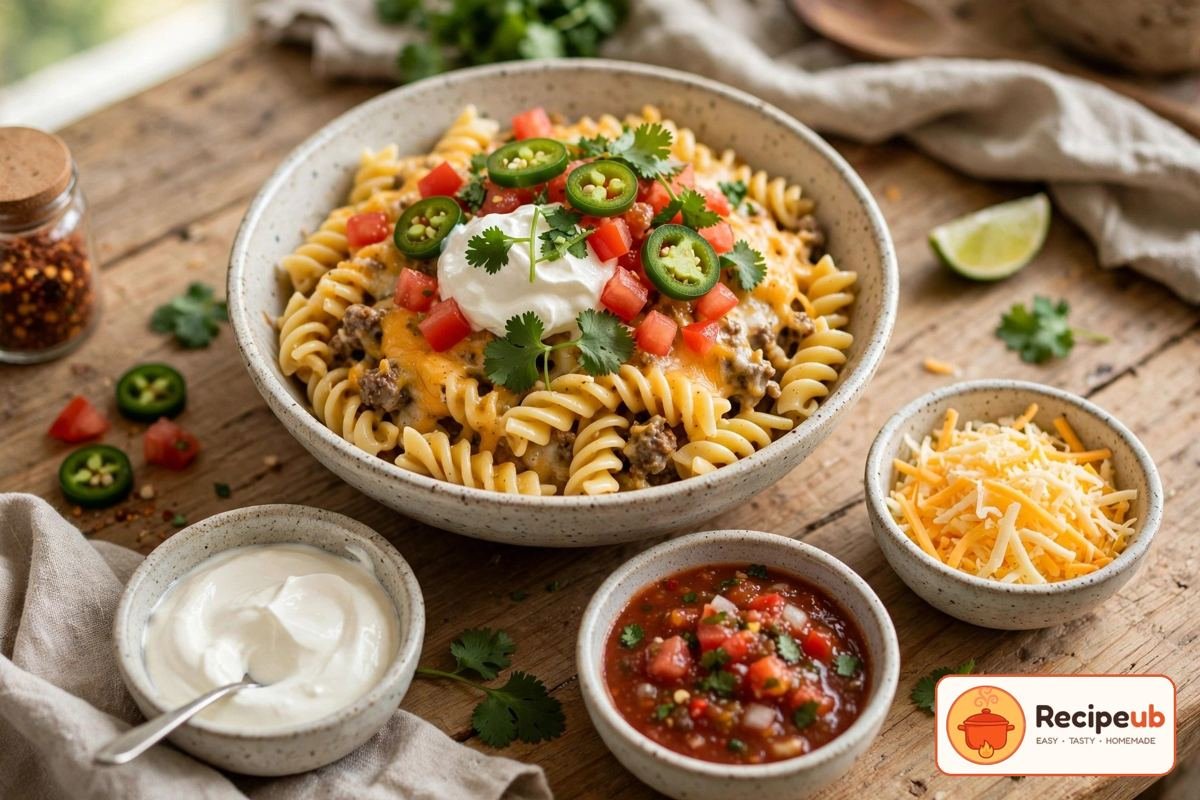
One-pot taco pasta is what happens when taco night and pasta night stop arguing: a pound of ground beef browned with onion and pepper, a homemade taco seasoning blend, and rotini that simmers right in the same pot with Rotel, black beans and corn until the sauce builds itself — then a full two cups of cheddar melted in at the end. It eats like a taco, twirls like a pasta, and lands on the table in 30 minutes with one pot to wash.
It is also, honestly, the smart way to buy beef right now. The Bureau of Labor Statistics put 100% ground beef at a $6.76-a-pound average in October 2026, with steak averaging $12.85 a pound in the same release — beef is the expensive protein in the pot this year. So this recipe stretches the pound: beans, corn and pasta gather around that one pound of beef until it feeds six people, at about $2.25 a serving, priced honestly below.
What makes this version different is the two things nobody else prints. If you know my one-pot Cajun chicken pasta, this is its Tuesday-night sibling: that pot is chicken, Cajun spice and penne; this one is ground beef, taco seasoning and rotini. Beyond that, every other recipe for this dish says “any short pasta works” with one liquid amount, and “season to taste” or “one packet” — and then your elbows go soupy. So this page prints a Pasta-Shape × Liquid Chart (six shapes, exact broth and simmer minutes each) and the homemade blend in exact teaspoons, costed against the packet it replaces.
The short answer: One-pot taco pasta takes 30 minutes total — 10 minutes of prep, 20 on the stove. One pound of ground beef is browned, drained and seasoned with a homemade taco blend (exact amounts below), then rotini simmers in the same pot in beef broth and Rotel with black beans and corn, and 2 cups of cheddar melt in off the heat. It serves 6, at about 610 calories and about $2.25 a serving — and the toppings go on at the table, taco-night style.
In This Recipe
The Plan at a Glance
- Dish: taco-seasoned ground beef pasta, cooked start to finish in one pot
- Pasta: 12 oz rotini (the chart below covers medium shells, penne, elbows, wagon wheels and farfalle)
- Time: 10 minutes prep / 20 minutes cook / 30 minutes total
- Serves: 6 real servings — about 2 cups each
- Cost: about $13.51 a pot, about $2.25 a serving, at November 2026 prices
- Seasoning: homemade blend, about 3 Tbsp, medium heat as written (see the blend and heat scale below)
- No salsa jar: Rotel and beef broth build the sauce — nothing else to open
Why This Recipe Works
The beef browns first — and gets drained. Browning the beef with the onion and pepper before any liquid goes in is where the taco flavor is built: real browned crust on the meat, sweet softened vegetables, and the seasoning blooming in a hot pot instead of dissolving raw into broth. Draining matters just as much: an 85/15 pound gives up a lot of fat, and if it stays, the sauce turns greasy and the pasta’s cooking liquid becomes a guess. Drain the pot and the liquid goes back in as measured broth — which is why the chart below can promise exact cups.
The pasta cooks in the sauce, on purpose. Rotini simmering in broth and Rotel juices releases its starch into the pot, and that starch is the sauce’s body — it is why a one-pot pasta comes out glossy and clinging instead of watery. There is no jar of salsa in this build, on purpose: the searches split right down the middle on “with salsa” versus “without salsa,” and the Rotel-plus-broth version is the cleaner one — tomato, green chile and seasoned liquid, nothing sweet or vinegary riding along. And because the pasta drinks the liquid as it cooks, the shape decides the amounts — the chart below gives the exact broth and minutes for six shapes.
The seasoning is a recipe, not a packet. “One packet” is not an amount, and “season to taste” is not a recipe. So this page prints the blend — chili powder, cumin, smoked paprika, garlic and onion powders, oregano, salt, a pinch of sugar and cayenne — in exact teaspoons, about 3 tablespoons for the pot, with a mild-to-hot scale and an honest comparison against the $1 packet it replaces. The full blend is below.
Beans and corn stretch the pound. One pound of beef across six servings sounds like a magic trick until you see the structure: the black beans and corn are not filler, they are the second and third bulk of taco night, doing exactly what they do in a burrito bowl. They make the servings real, and they are most of why this dinner lands at about $2.25 a serving while beef sits at $6.76 a pound — the recipeub budget method in one pot: stretch the expensive ingredient with cheap ones that belong in the dish anyway.
What Pasta Shape Works Best in One Pot? The Pasta-Shape × Liquid Chart
Rotini is what this recipe is written for — the spirals trap the seasoned sauce in every twist, and the shape holds up through the simmer. But one-pot cooking is not boxed pasta cooking: the pasta drinks the liquid as it goes, so every shape needs its own broth and its own minutes. Shells and wagon wheels trap sauce (and beans, and corn) in their curves; elbows cook fastest and go soft fastest; farfalle’s pinched centers are the slowest thing in the box. Here is the chart I cook from, all for 12 oz of pasta in this recipe’s pot. The Rotel and its juices (about 1¼ cups) and the beans and corn are in the pot for every row — the broth column is what changes:
| Shape | Beef broth | Covered simmer | Rest (off heat) | Notes |
|---|---|---|---|---|
| Rotini (the recipe) | 2½ cups | 11 minutes | 5 minutes | Spirals trap sauce in every twist; the benchmark row |
| Medium shells | 2½ cups | 11–12 minutes | 5 minutes | The cups catch beans and corn — stir well so they fill evenly |
| Penne | 2¾ cups | 12–13 minutes | 5 minutes | Sturdy tubes need the full simmer and a little more liquid |
| Elbow macaroni | 2¼ cups | 8–9 minutes | 5 minutes | Cooks fastest and goes soft fastest — check at 8 minutes |
| Wagon wheels | 2½ cups | 11–12 minutes | 5 minutes | The spokes trap sauce; give the pot an extra stir |
| Farfalle (bow ties) | 2¾ cups | 13–14 minutes | 5 minutes | The pinched centers cook slowest — they need the extra minutes and liquid |
How to read the chart: simmer times start when the pot comes back to a boil after the pasta goes in, and every shape should be checked a minute before its window opens — one-pot pasta goes from firm to soft quickly at the end, and the 5-minute rest finishes the job while the cheese goes in. Long pasta is the one shape to skip — it clumps and cooks unevenly in a skillet.
What Does One-Pot Taco Pasta Cost? The Honest Math
The beef math first, because it is the headline. At the BLS October 2026 average of $6.76 a pound for 100% ground beef, the one pound in this pot costs $6.76 — almost exactly half the cost of the whole dinner. The rest — rotini, cheese, beans, Rotel, corn, broth, onion, pepper, oil and spices — comes to about $6.75, for a batch total of about $13.51, or about $2.25 a serving across six servings.
| Ingredient | Basis | Cost |
|---|---|---|
| Ground beef, 1 lb | $6.76/lb (BLS Oct 2026 average, 100% ground beef) | $6.76 |
| Rotini, 12 oz | — | ~$1.00 |
| Cheddar or Mexican blend, 8 oz | — | ~$2.00 |
| Black beans, 1 can | — | ~$0.90 |
| Rotel, 1 can (10 oz) | — | ~$1.25 |
| Corn, 1 cup frozen | — | ~$0.60 |
| Beef broth, 2½ cups | — | ~$1.00 |
| Onion, bell pepper, olive oil, spices | — | ~$1.00 |
| Pot total | ~$13.51 |
The honest framing: beef is half the pot cost at today’s prices, and no version of this recipe changes that — what changes it is the build around the beef. Beans at ninety cents and corn at sixty are what turn one expensive pound into six servings, and the seasoning costs pennies from jars already in the cabinet.
Ingredients
- 1 Tbsp olive oil
- 1 lb ground beef (85/15)
- 1 yellow onion, diced
- 1 bell pepper (any color), diced
- 1 batch homemade taco seasoning (about 3 Tbsp — exact blend in the notes and in the blend section below), or 1 store-bought packet plus a pinch of cayenne
- 2½ cups beef broth
- 1 (10 oz) can Rotel diced tomatoes with green chiles, undrained
- 12 oz rotini
- 1 (15 oz) can black beans, drained and rinsed
- 1 cup frozen corn
- 2 cups (8 oz) shredded cheddar or Mexican blend cheese
- Toppings to serve (optional): sour cream, sliced green onions, crushed tortilla chips, diced avocado, pico de gallo, pickled jalapeños, cilantro, lime wedges
Ingredient notes: The blend is the recipe, so here it is in the list where it belongs: 1 tablespoon chili powder, 1½ teaspoons ground cumin, 1 teaspoon smoked paprika, 1 teaspoon garlic powder, 1 teaspoon onion powder, ½ teaspoon dried oregano, ½ teaspoon kosher salt, ¼ teaspoon sugar and ¼ teaspoon cayenne (medium heat) — about 3 tablespoons total, mixed in a small bowl before you start. That is more seasoning than a packet holds, on purpose: a packet is measured to season meat alone, and this blend has to season the meat, the pasta and the sauce. The Rotel goes in undrained — its juices are part of the pasta’s cooking liquid, and the chart above is built on them. Use the beef as written, 85/15: leaner beef works and drains less, but 85/15 browns better and tastes like taco night. Shred your own cheese if you can — bagged shreds are coated to resist melting and go in a little grainy; a block of cheddar takes two minutes and melts smooth.

How to Make One-Pot Taco Pasta
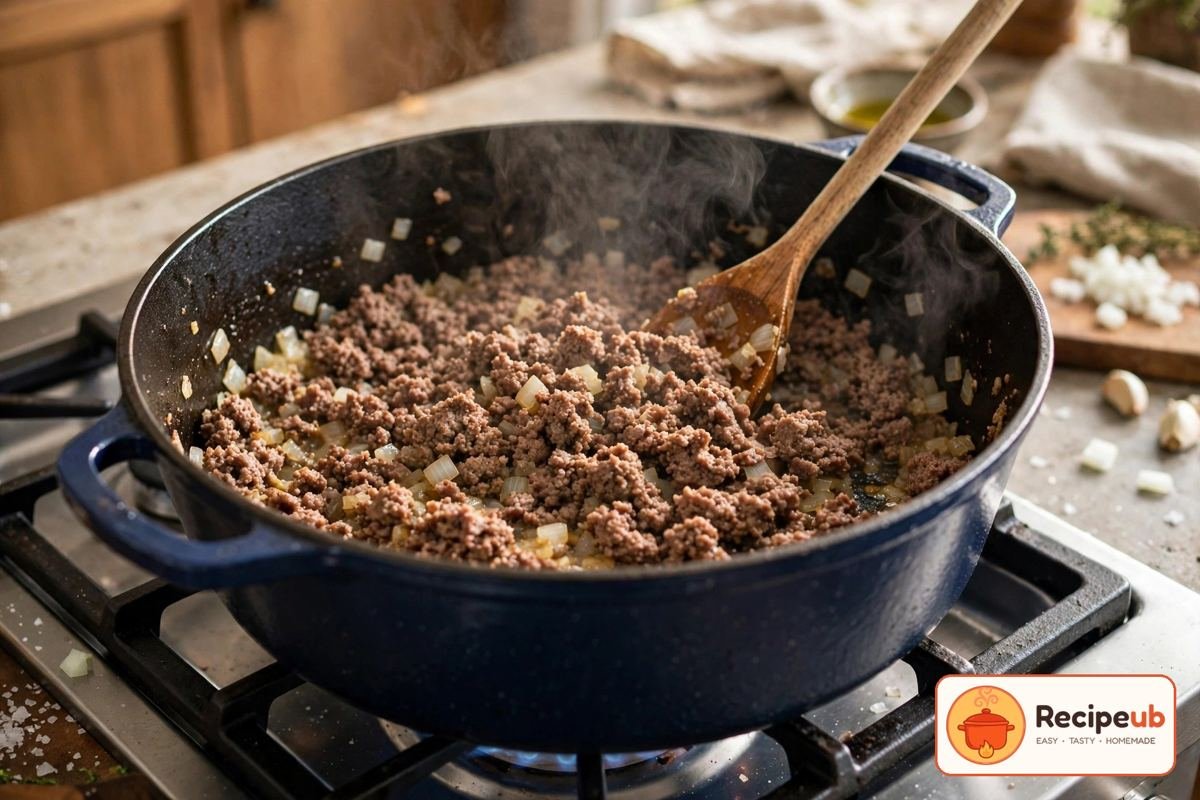
- Brown the beef and vegetables. Heat the olive oil in a large deep skillet or Dutch oven over medium-high heat. Add the ground beef, onion and bell pepper and cook 6 to 7 minutes, breaking the beef into small crumbles, until the beef is browned with no pink left and the vegetables have softened. Beef cooked like this is well past 165°F by the time it is fully browned — the browning is the point here, not just the cooking.
- Drain, then bloom the seasoning. Drain the fat from the pot and return the pot to the heat. Stir in the full batch of homemade taco seasoning and cook about 30 seconds, stirring constantly, until it smells toasted and darkens a shade. This brief bloom in the hot pot is what makes a homemade blend taste like it simmered for an hour.
- Add the liquids and the beans and corn. Pour in the beef broth and the Rotel with all its juices, then stir in the black beans and the frozen corn. Bring the pot to a boil, scraping up the browned bits from the bottom — they belong in the sauce.
- Simmer the rotini in the pot. Stir in the rotini, cover, and reduce to a steady simmer for 11 minutes, stirring once or twice so nothing catches on the bottom, until the rotini is just tender. (Another shape? Your broth and minutes are in the Pasta-Shape × Liquid Chart above.)
- Rest the pot. Take the pot off the heat and let it stand, covered, for 2 minutes. The rotini finishes drinking the last of the liquid and the sauce settles from loose to glossy.
- Melt the cheese in, off the heat. Stir in the shredded cheese a handful at a time, stirring after each handful until it melts completely into the sauce, about 2 minutes total. Off the heat is the rule: cheese stirred into a boiling pot turns oily and grainy; cheese stirred into a resting pot turns into a smooth, clinging sauce.
- Serve taco-night style. Rest the finished pot 5 minutes total, taste for salt, and bring the whole pot to the table with the toppings bar around it.

One-Pot Taco Pasta (Ground Beef, Cheesy, 30 Minutes)
Ingredients
Equipment
Method
- Heat the oil in a large deep skillet or Dutch oven over medium-high heat. Cook the beef, onion and bell pepper 6 to 7 minutes, crumbling the beef, until fully browned and the vegetables soften.
- Drain the fat. Stir in the taco seasoning and cook about 30 seconds, stirring, until fragrant and darkened.
- Add the broth and the Rotel with its juices, then the black beans and corn. Bring to a boil, scraping up the browned bits.
- Stir in the rotini, cover, and simmer 11 minutes, stirring once or twice, until just tender.
- Rest off the heat, covered, 2 minutes.
- Stir in the cheese a handful at a time until melted and smooth, about 2 minutes. Rest 5 minutes total, then serve with toppings at the table.
Notes
- Homemade taco seasoning blend (about 3 Tbsp): 1 Tbsp chili powder, 1½ tsp ground cumin, 1 tsp smoked paprika, 1 tsp garlic powder, 1 tsp onion powder, ½ tsp dried oregano, ½ tsp kosher salt, ¼ tsp sugar, ¼ tsp cayenne. Heat scale — Mild: leave the cayenne out. Medium (as written): ¼ tsp cayenne. Hot: ½ tsp cayenne plus red pepper flakes or a minced jalapeño. One packet holds about 2 Tbsp; this recipe uses about 3 Tbsp because the blend seasons the pasta and sauce too, not just the meat.
- Other shapes (12 oz, Rotel in every row): medium shells 2½ cups broth / 11–12 min · penne 2¾ cups / 12–13 min · elbow macaroni 2¼ cups / 8–9 min · wagon wheels 2½ cups / 11–12 min · farfalle 2¾ cups / 13–14 min. Rest 5 minutes for every shape.
- Cream cheese variation: stir in 4 oz of cubed cream cheese with the cheddar for a creamier, tangier sauce. Queso-style: swap 1 cup of the cheddar for cubed Velveeta.
- Storage: fridge 3 to 4 days; freezer up to 2 months. Reheat gently with a splash of broth or water to loosen the sauce.
Emma’s Tips for the Best One-Pot Taco Pasta
Cheese goes in off the heat, a handful at a time. Boiling liquid breaks cheese into oil and grains; a resting pot melts it into a sauce. A handful, stir until it disappears, then the next — two minutes of patience for the glossiest pot of the week.
Rest the full 5 minutes. Off the heat, the rotini drinks the last of the liquid and the starch sets the sauce’s body: served straight off the simmer it looks thin; five minutes later it coats a spoon. If it ever rests too long and tightens up, a splash of warm broth brings it back in one stir.
The Homemade Taco Seasoning Blend (With Exact Amounts)
Here is the blend, in exact amounts. Mixed together it makes about 3 tablespoons — what this pot uses for 1 pound of beef plus everything the beef is feeding:
| Ingredient | Amount |
|---|---|
| Chili powder | 1 Tbsp |
| Ground cumin | 1½ tsp |
| Smoked paprika | 1 tsp |
| Garlic powder | 1 tsp |
| Onion powder | 1 tsp |
| Dried oregano | ½ tsp |
| Kosher salt | ½ tsp |
| Sugar | ¼ tsp (a pinch) |
| Cayenne pepper | ¼ tsp (medium — see the heat scale) |
The heat scale: the blend’s flavor — chili powder, cumin, paprika, garlic — stays the same at every level; only the cayenne moves. Mild: leave the cayenne out entirely — all the taco flavor, no burn, the kid-table row. Medium (the recipe as written): ¼ teaspoon of cayenne, a warm back-of-the-throat heat most adults call just right. Hot: ½ teaspoon of cayenne, plus red pepper flakes or a minced jalapeño cooked with the pepper.
Homemade vs. the packet, honestly:
| Store-bought packet | This homemade blend | |
|---|---|---|
| Cost | About $1 a packet, every single time | Pennies a batch, from jars already in the cabinet |
| Amount | About 2 Tbsp in a 1 oz packet | About 3 Tbsp — seasons the meat and the pasta and sauce |
| Salt | Salt leads the ingredient list on most packets — you get all of it or none | ½ tsp kosher salt, set by you, easy to cut |
| What’s in it | Seasoning plus fillers and thickeners (maltodextrin, cornstarch) that bulk out the packet | Nine spices, nothing else |
The honest framing: the packet is genuinely convenient, and if a packet is what taco night runs on at your house, use it here exactly as written — one packet plus a pinch of cayenne lands close. But the blend wins on the three things this page cares about: pennies instead of a dollar, salt you set yourself, and enough of it. A packet is measured for a pound of meat alone; this pot asks its seasoning to flavor the meat, 12 ounces of pasta, beans, corn and the broth too — 2 tablespoons cannot do that job.
Set Out a Toppings Bar
Taco pasta is a taco that wandered into a pasta pot, so serve it like one: the pot in the middle, the toppings around it, every person finishing their own bowl. The hot, cheesy pot wants something cool, something crunchy and something bright on top.
| Topping | What it adds | When it goes on |
|---|---|---|
| Sour cream | Cool, tangy contrast against the heat | At the table, a dollop per bowl |
| Extra shredded cheddar or Monterey Jack | More cheese, melting on contact | Right at serving |
| Crushed tortilla chips | The crunch the pot cannot give you | Last second, at the table — never in the pot |
| Diced avocado | Rich and cool | At the table |
| Pico de gallo | Fresh, bright, juicy | At the table |
| Sliced green onions | A fresh bite | At serving |
| Pickled jalapeños | Heat plus acid | At the table, for the hot-row people |
| Fresh cilantro | Herby brightness | At serving |
| Lime wedges | A squeeze of acid to wake the whole bowl up | At the table |
The one rule of the bar: crunchy things go on at the table, at the last second, every time. Chips stirred into the pot — or left sitting on a stored bowl — go soft in minutes and take the texture contrast with them.
Variations: Cream Cheese, Queso-Style and Lighter
Stir in cream cheese (the creamy branch). The searches ask for this version by name, so here it is with amounts: cube 4 oz of cream cheese and stir it in with the cheddar at step 6, letting it melt completely before the last handful of cheese goes in. The sauce comes out creamier and a little tangy. The queso-style cousin: swap 1 cup of the cheddar for cubed Velveeta, melted in the same way, for the full stadium-sauce effect.
Make it lighter, or skip the cheese. For the lighter build the searches keep asking for: use 93% lean ground beef or turkey, keep the beans and corn as they are (they are the serving size), and cut the cheese to 1 cup. For a no-cheese pot, leave the cheese out and lean on the bar — avocado, pico and lime carry a cheese-less bowl further than you would expect.
Storage and Reheating
Fridge: Leftovers keep 3 to 4 days in a covered container, stored plain — no toppings in the container. The rotini keeps drinking sauce as it sits, so day-two pasta comes out looking drier than the pot you stored; that is the starch, not spoilage, and the reheat fixes it.
Freezer: Up to 2 months. The pasta softens a little on thawing, but the seasoned beef, beans and corn come back beautifully. Thaw overnight in the fridge.
Reheating: On the stove over medium-low with a splash of beef broth or water (about 2 tablespoons per serving), stirring until the sauce loosens back to glossy, 4 to 5 minutes. In the microwave, the same splash of liquid, covered, in 1-minute bursts with a stir between them. Bring leftovers back to steaming hot throughout, 165°F, and top fresh from the bar.
The meal-prep note: this pot is built for Sunday batch cooking as much as for Tuesday. If batch-cooking the beef base itself is your system, my ground beef meal prep is the freezer-staple version: one big seasoned batch, portioned, ready to become this pot on the night you need it.
FAQs
What is the best pasta shape for one-pot taco pasta?
Rotini, and the recipe is written for it — the spirals trap the seasoned sauce, the shape holds its bite through an 11-minute covered simmer, and it drinks exactly the 2½ cups of broth in the card. The full chart is above, but the headline numbers: penne and farfalle need 2¾ cups of broth and 12 to 14 minutes, elbow macaroni only 2¼ cups and 8 to 9 minutes, wagon wheels 2½ cups and 11 to 12 minutes. Whatever you swap in, change the broth and the minutes with the shape — that pairing is the whole chart.
Can I use ground turkey instead of ground beef?
Yes — 1 pound of ground turkey, same pot, same timing, same blend, no other changes. Turkey is leaner than 85/15 beef, so it gives up less fat as it browns; keep the olive oil, and if the pot looks dry, the broth stage is right behind it. The flavor reads milder, so turkey pots at my house run the medium or hot row of the heat scale. For taco-seasoned turkey with no pasta at all, my ground turkey taco skillet is that recipe.
Do I need to drain the ground beef?
Yes, with this build — and it is a liquid decision as much as a grease one. A pound of 85/15 gives up a real amount of fat and water as it browns, and one-pot pasta lives or dies on its liquid measurement: the chart promises the rotini exactly 2½ cups of broth plus the Rotel juices, and undrained beef makes that number a guess. Drain, and the sauce comes out glossy instead of pooled, and the chart stays true.
Is taco pasta spicy? How do I make it milder — or hotter?
As written, a true medium: the blend carries ¼ teaspoon of cayenne — a warm, back-of-the-throat heat most adults call just right — on top of the gentle chile warmth of the chili powder and the Rotel. Milder: leave the cayenne out of the blend entirely; that is the mild row of the heat scale in the blend section, and it is the kid-table version. Hotter: go to ½ teaspoon of cayenne and add red pepper flakes or a minced jalapeño with the bell pepper. And remember the leftovers rule — cayenne blooms as the pot sits, so day two eats a notch hotter than day one.
How much homemade taco seasoning equals one packet — and is 1/4 cup too much?
One standard packet (1 oz) holds about 2 tablespoons of seasoning, meant to season a pound of meat by itself. This recipe uses about 3 tablespoons of the homemade blend — deliberately more — because the blend has to season the meat, the pasta, the beans, the corn and the sauce all at once. And the quarter-cup question home cooks genuinely ask: yes, ¼ cup (4 tablespoons) is too much for a pound of meat alone — the salt would take over. For this whole pot, 3 tablespoons is the number; the full blend is in the blend section above.
Can I make taco pasta ahead of time, or meal prep it?
Yes — it is one of the better meal-prep pots on this site. Portion the finished pasta into containers plain (no toppings), refrigerate up to 3 to 4 days, and reheat with a splash of broth or water to bring the sauce back, topping fresh each time. The pasta softens a touch by day three, the way all meal-prep pasta does, but the seasoned beef and beans hold their flavor completely. For the freezer, it keeps up to 2 months.
How long does taco pasta last in the fridge? Can I freeze it?
Three to four days in the fridge in a covered container, and up to 2 months in the freezer. Two honest notes: the rotini keeps absorbing sauce in the fridge, so stored pasta looks drier than the pot you made — a splash of broth at the reheat is part of the recipe, not a rescue. And freeze it plain; no topping (chips especially) survives the freezer.
Can I double the recipe?
Yes — this pot is built for a crowd, and doubling is the natural move for a party or a freezer restock. Use your biggest Dutch oven, double every ingredient including the blend (about 6 tablespoons total), and keep the liquid ratio from the chart: for 24 oz of rotini, 5 cups of broth with 2 cans of Rotel. The simmer time barely changes — check the rotini at the same 11 minutes — but stir a little more often, because a fuller pot catches on the bottom more easily.
Can I make it with leftover taco meat?
Yes — one of the best uses of taco night leftovers there is. Skip the browning step, soften the onion and pepper in the oil, add the broth, Rotel, beans and corn, and stir in the leftover meat (about 3 to 4 cups of crumbles) as the pot comes to a boil, then the rotini as written. The meat arrives seasoned, so cut the added blend to about 1 tablespoon and taste before salting.
What do you serve with taco pasta? What toppings go on it?
The toppings bar — it has its own section above because it matters. The short list: sour cream for cool contrast, crushed tortilla chips for crunch (at the table, at the last second, never in the pot), diced avocado, pico de gallo, extra cheese, green onions, pickled jalapeños, cilantro and lime. Beyond the bowl, the pot is a full dinner on its own — 2 cups a serving with beef, beans and corn already in it. And on weeks when half the table wants actual tortillas instead, my 5-ingredient chicken tacos run the same taco-night flavors in the other direction.
Final Thoughts
One-pot taco pasta earns its place in this kitchen the honest way: one pot, 30 minutes, one pound of beef stretched across six real servings at about $2.25 each, with its seasoning written down in teaspoons instead of left to a packet. The charts are the recipe as much as the ingredient list is — learn your shape’s broth and minutes from the Pasta-Shape × Liquid Chart, set your row on the heat scale, and the pot comes out the same every Tuesday. Make it mild for the kids, hot for the rest, and let the leftovers argue for a double batch next week.
More Easy One-Pot & Skillet Dinners
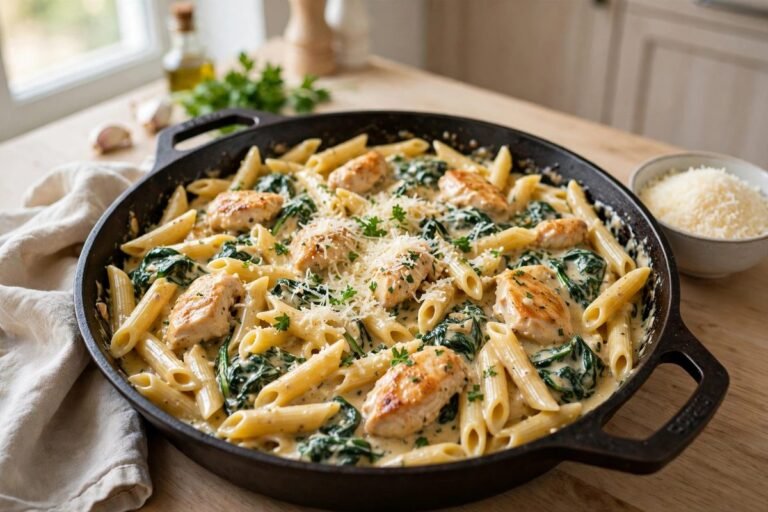
If one pot and a 30-minute clock is your kind of weeknight, the rest of my skillet shelf runs on the same rules. My homemade sloppy joes take the same pound of ground beef in the sandwich direction — no packet, no can, a sauce you can pronounce — and my 5-ingredient ground beef skillet is the stripped-down version of ground-beef night: five ingredients, one pan, nothing extra. And for the nights when the pot has to be pasta but the mood is creamy instead of taco-spiced, my one-pot creamy garlic chicken pasta is the same one-pot method in a completely different flavor family — garlic, cream and chicken, pasta simmered right in the sauce just like here.




Never Run Out of Dinner Ideas
One easy air fryer or slow cooker dinner in your inbox every week. No spam, ever.
You’re on the list — welcome to Recipeub!