
Air Fryer Steak (Time and Temp Chart for Every Doneness)
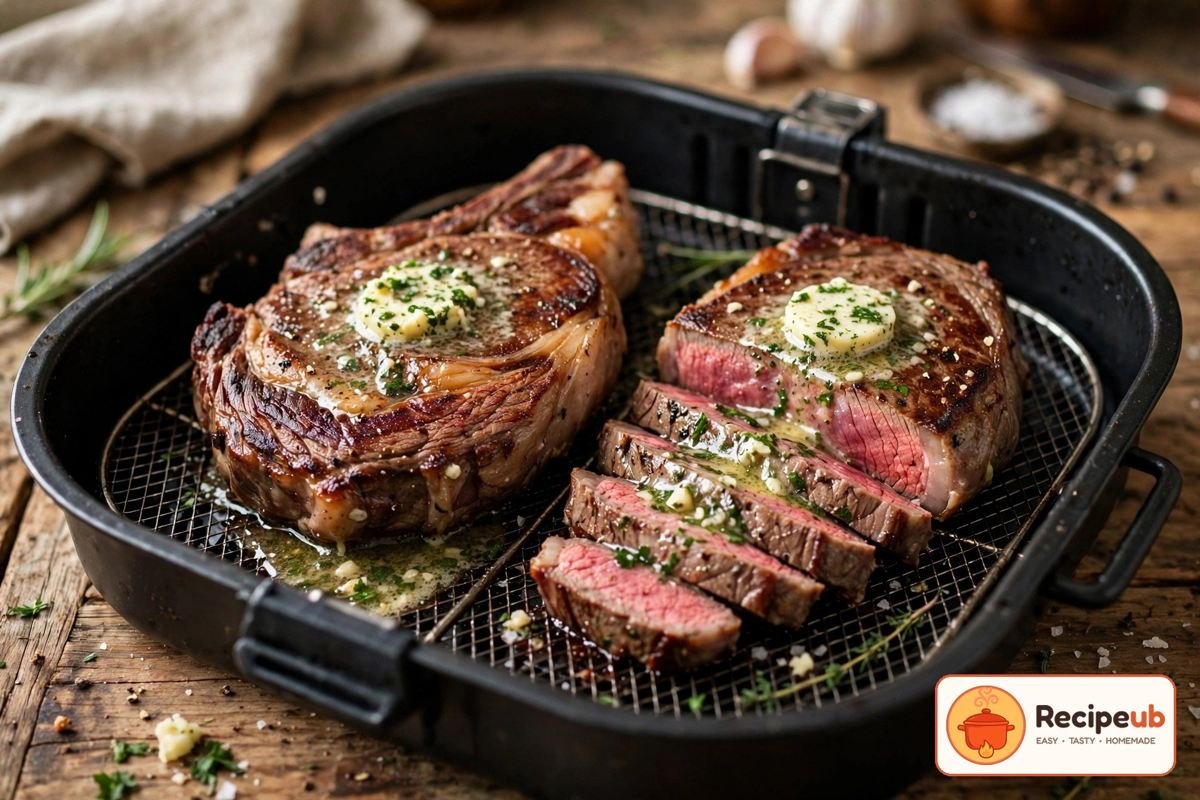
Air fryer steak is a whole-cut steak cooked in the basket — and it is the one recipe where the search itself tells you what the page has to be. Type the dish into Google and the completions are not ingredients or variations; they are doneness levels and charts: medium rare, medium, medium well, time and temp chart, from frozen. The searcher is holding a specific steak, at a specific thickness, aimed at a specific doneness, and asking for the cell where those cross — plus the number nobody prints: when to pull it out. This version is built to answer exactly that. The steak is 2 boneless ribeyes, 1 inch thick, about 10 ounces each, out of the fridge 30 minutes, patted completely dry, rubbed with 1 tablespoon of avocado oil, 2 teaspoons of kosher salt, 1 teaspoon of black pepper and 1 teaspoon of garlic powder. The basket is preheated to 400°F, the steaks cook 9 to 10 minutes with one flip, they come out at 125°F, and they rest 5 minutes under garlic herb butter while the temperature climbs to a 130–135°F medium-rare. One whole steak per serving: about 675 calories and about $10.40, and every number in that paragraph is a cell in the chart below.
Read page 1 for this dish closely and it splits into two halves that never meet. The recipe pages print one thickness — 1 inch — one temperature, and a short list of final temperatures with no pull temperatures in the method, and even those lists disagree with each other by a full grade: one ribeye holder’s “well done” is 145–150°F, which is another holder’s “medium,” and one recipe prints two different doneness ladders on the same page. The chart pages print the grid but carry no recipe — no tested build, no servings, no calories, no cost — and the best of them prints no USDA line anywhere, so a 125°F rare finish sits on the page unexplained. And the frozen question, which completes on stem after stem, is answered by exactly one tested account that no recipe page ever mentions. This page prints the three systems the decisions actually need: the thickness × doneness matrix with pull temperatures and the federal line shown in the open, the cut comparison with dated prices, and the frozen verdict taken from the test that was actually run.
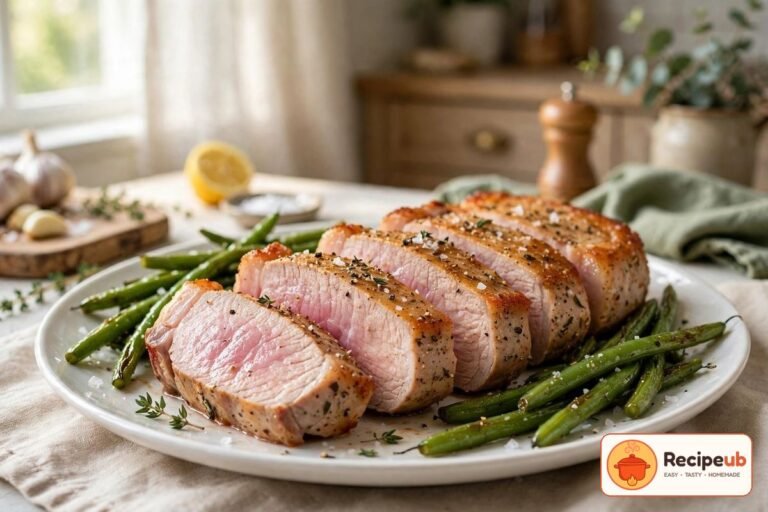
It also knows its neighbors on this site, because the air fryer shelf here is deliberate. This post is the shelf’s beef — a whole cut with a doneness ladder. Its nearest red-meat neighbor is my air fryer pork tenderloin — the air fryer shelf’s other red-meat centerpiece, a pork cut cooked to one temperature (145°F and a rest); the steak is the one that comes with a doneness ladder: the tenderloin has exactly one right answer, and this steak has five, which is why this page is mostly a chart. And where the tenderloin is the shelf’s lean centerpiece, my air fryer salmon — the shelf’s other premium protein, done when it flakes at 145°F; steak is the protein you pull early and let carryover finish is the other protein whose number is a finish line rather than a ladder. One shelf, three proteins, three different relationships with the thermometer.
The short answer: Take 2 boneless ribeye steaks (1 inch thick, about 10 oz each) out of the fridge 30 minutes ahead; pat them completely dry and rub with 1 Tbsp avocado oil, 2 tsp kosher salt, 1 tsp black pepper and 1 tsp garlic powder. Preheat the air fryer to 400°F for 5 minutes. Cook 9–10 minutes, flipping at 5, and pull at 125°F for medium-rare. Rest 5 minutes with garlic herb butter on top — the temperature climbs to 130–135°F as it rests. Two servings at about 675 calories and $10.40 each, in 30 minutes.
In This Recipe
The Plan at a Glance
- Steak: 2 boneless ribeye steaks, 1 inch thick, about 10 oz each (1¼ lb total) — out of the fridge 30 minutes before cooking, patted completely dry
- Seasoning: 1 Tbsp avocado oil + 2 tsp kosher salt + 1 tsp black pepper + 1 tsp garlic powder — salt, pepper and garlic only; no rub, no marinade, no breading. The chart is the system, not a spice blend
- The cook: preheat 400°F for 5 minutes → steaks in a single layer, not touching → 9–10 minutes total, one flip at 5 minutes → pull at 125°F for medium-rare
- The finish: rest 5 minutes with garlic herb butter melting over the top (2 Tbsp unsalted butter + 1 minced garlic clove + 1 tsp chopped parsley or thyme) — the temperature climbs about 5°F during the rest, to a 130–135°F final
- Time: 10 minutes prep / 15 minutes cook (the 5-minute preheat plus 9–10 in the basket, stated openly) / 30 minutes total, including the 5-minute rest. The 30-minute room-temperature stand is passive and is stated in the method — it is not hidden inside the clock
- Yield: 2 servings — one whole steak each
- Calories: ~675 per serving (estimate)
- Cost: about $10.40 per serving at November 2026 prices — the ribeye line is a verified shelf price, the rest labeled estimates. The most expensive dinner on this site, printed as one
- Storage: fridge 3 to 4 days; reheat in the air fryer at 350°F for 3 to 4 minutes, never the microwave — the rules are in the Storage section below
Why This Recipe Works
The pull temperature is the recipe; the minutes are just the map. Every steak page prints minutes, and minutes are the least portable number in the dish — they move with thickness, starting temperature and the machine’s hot spots. What does not move is the thermometer reading at which the steak has to leave the basket for the doneness you ordered. So this page is organized the other way around: the matrix gives you minutes to plan by, and a pull temperature to cook by, and the method checks the temperature from minute 8 instead of trusting the clock at minute 10. A steak pulled at 125°F is medium-rare in any air fryer; a steak cooked “10 minutes” is medium-rare only in the one it was tested in.
Room temperature and bone dry — the crust is decided before the basket. The whole cluster of pages that rank for this dish starts the same two ways, and the agreement is the evidence: the steak sits out 30 minutes so the center is not fighting fridge-cold while the surface browns, and it is patted completely dry, because surface moisture steams before it sears and a steamed surface never catches up. Neither step is in the card’s clock — the stand is passive, and the patting is inside the 10 prep minutes — but both are printed in the method where they belong, not in a tips box the cook reads afterward.
The ladder on this page is the cluster’s convergent one — and the disagreement is printed, not smoothed over. Page 1’s doneness ladders disagree by a full grade (the exhibit is in the chart notes below): “medium” is 135–140°F on one page and 145°F on three others, and “well done” spans 145–150°F to 160°F and up. This page adopts the ladder the tested cluster converges on — final temperatures of 125 / 130–135 / 140–145 / 150–155 / 160°F+ — prints the pull temperature for each rung, and shows the other ladders next to it. A reader who has been burned by a shifted ladder is this page’s exact audience; pretending the shift does not exist is how it happened to them.
The USDA line is printed on the chart, not buried under it. The federal minimum for beef steaks is 145°F with a 3-minute rest. On the ladder that is the medium row’s neighborhood — which means rare and medium-rare finish below it, deliberately, as they do in every steakhouse in the country. This page says both things in the same place: the official line, in a band across the chart, and the cook’s-choice rows below it, labeled as what they are. A page that prints a 125°F final temperature with no federal line anywhere has not protected its reader; it has just not told them.
Ribeye is the build because marbling forgives the machine. An air fryer has hot spots, and a lean cut punishes every second of overshoot. Ribeye’s marbling renders in the basket and bastes the meat from inside, which is why it is the most forgiving first steak for this method — and why the Cut Comparison below exists: it prints exactly what the sirloin swap saves (about $1.35 a serving) and what it costs (1–2 minutes less, and never past medium), so the cheaper cut is a decision, not a downgrade.
This shelf already runs on charts and single temperatures. The air fryer’s other plain-seasoned meat-and-temperature recipe here is my air fryer pork chops (no breading) — the shelf’s other plain-seasoned meat-and-temperature recipe, seasoned and cooked to a number the way this steak is. And the matrix below joins the shelf’s air fryer recipes with times and temperatures — the shelf’s chart collection, where this steak matrix belongs: the collection the site already keeps for exactly this kind of table. Steak was the protein the collection was missing — the one whose chart needs five columns instead of one.
How Long Do You Cook a Steak in the Air Fryer? The Thickness × Doneness Matrix
Here is the chart this post exists to print. It is built for the way the search is actually asked — a thickness in one hand and a doneness in the other — and every cell carries both numbers the cook needs: the minutes to plan by and, in the column header, the pull temperature to cook by. The conditions are printed with the chart because they are part of the numbers: 400°F, air fryer preheated 5 minutes, steaks started at room temperature (30 minutes out of the fridge), flipped once halfway. Minutes are total minutes. Pull is the thermometer reading when the steak comes OUT of the basket; Final is where it lands after the 5-minute rest.
| Thickness | Rare — pull 120°F | Medium-rare — pull 125°F | Medium — pull 135°F | Medium-well — pull 145°F | Well done — pull 155°F |
|---|---|---|---|---|---|
| ¾ inch | 6–7 min | 7–8 min | 8–9 min | 9–10 min | 10–11 min |
| 1 inch — the recipe | 8 min | 9–10 min | 10–11 min | 11–12 min | 12–13 min |
| 1¼ inch | 9 min | 10–12 min | 12–13 min | 13–14 min | 14–15 min |
| 1½ inch | 10 min | 12 min | 13–14 min | 14–15 min | 15–16 min |
| 2 inches | 12 min | 14–16 min | 16–17 min | 17–18 min | 18–20 min |
| Final temp after rest | 125°F | 130–135°F | 140–145°F | 150–155°F | 160°F+ |
The USDA band, printed across the chart — not in a footnote: the federal minimum for beef steaks is 145°F with a 3-minute rest (FoodSafety.gov). On this ladder, that is the medium row’s neighborhood. Rare and medium-rare finish below the federal minimum. That is the deliberate, informed choice most steak eaters make, and this page prints it in the open rather than letting a 125°F final temperature sit unexplained. For anyone who should not eat under the minimum — young children, pregnant people, older adults, anyone immunocompromised — the medium row and above is the chart’s answer.
How to read the chart: the minutes are the convergent middle of the versions that rank for this dish. The grid’s spine is the chart holder’s 5×5 (its cells matched the tested recipe pages’ middles at every thickness), cross-checked against the ribeye-specific rows (a 1-inch ribeye at 8–10 minutes for medium-rare) and the two-machine tested ladder. Carryover is the reason the pull column exists: the rest adds about 5°F at ¾ to 1¼ inches and up to 10°F on a 2-inch steak — the pull temperature, not the final one, is the number the cook watches. The honest adjustments: bone-in cuts add 2–4 minutes; lean cuts (sirloin, filet) start checking 1–2 minutes early — the Cut Comparison below prices that in; and for 1½- to 2-inch steaks, part of the cluster drops the set temperature to 375–380°F so the crust does not outrun the center. This recipe’s answer: at 1½ inches, 400°F still works with the flip; at 2 inches, either drop to 380°F and take the top of the minute range, or reverse-sear — air fry at 350°F to 10°F below target, then 30–45 seconds a side in a ripping-hot skillet. Starting temperature matters and is printed: one chart holder times its steaks from fridge-cold and runs a minute or two longer for it; this chart’s steaks start at room temperature, and a fridge-cold steak needs the extra minutes its page promises. Whole cuts only: this ladder is for steaks. Ground beef’s federal number is 160°F, with no ladder — which is why my ground beef meal prep — ground beef plays by a different rule (160°F, no ladder); the chart on this page is for whole cuts only never borrows these rows, and a burger should never be read off this chart. Under ¾ inch, there is no chart: the cluster’s honest line is that a thinner steak cooks through before it browns — a skillet is the better tool, and this page says so. (Steak bites are a different dish with their own chart; they get their own post, not a row here.)
Why do the ladders disagree? The exhibit, printed because the chart is where it belongs. Page 1’s final-temperature ladders for the same five words, exactly as printed:
| Page | Rare | Medium-rare | Medium | Medium-well | Well done |
|---|---|---|---|---|---|
| The Recipe Critic | — | 135°F | 145°F | — | 160°F |
| The Big Man’s World | 120°F | 130–135°F | 135–140°F | 140–145°F | 145–150°F |
| ChefsResource (ribeye) | 125°F | 135°F | 145°F | 150°F | — |
| Greedy Gourmet | 125°F | 135°F | 145°F | 155°F | 160°F |
| Love Food Not Cooking (its chart) | 120°F | 130°F | 140°F | — | 160°F |
| Love Food Not Cooking (its own notes) | 125°F | 135°F | 145°F | 150°F | 160°F |
| Fork To Spoon | 125°F | 130–135°F | 140–145°F | 150–155°F | 160°F+ |
The spread is a full grade: one page’s “well done” is another page’s “medium,” and one page disagrees with itself between its chart and its notes. Most of the spread is the pull-versus-final confusion — a page printing 135°F flat for medium-rare is often describing the same steak as this chart’s pull-at-125, measured after the rest — and one ladder is simply shifted a full grade below the cluster. This chart adopts the convergent ladder (the bottom row), prints both the pull and the final for every rung, and lets the reader see the whole argument at once.
Which Cut Is Best for the Air Fryer? The Cut Comparison Table
Here is the second chart. The matrix above was built on ribeye — and a chart that times a ribeye and a sirloin identically is wrong about one of them. These are the four cuts the searches actually ask about, in demand order, with the two things no page-1 recipe prints together: what each cut does to the matrix, and what each cut costs, dated.
| Cut | Marbling & tenderness | Best thickness | The matrix adjustment | Price basis (dated) |
|---|---|---|---|---|
| Ribeye, boneless — the recipe | The most marbling of the four; the fat renders in the basket and bastes the meat — the most forgiving cut in a machine with hot spots | 1 to 1½ in | The matrix as printed | $15.99/lb — H-E-B USDA Choice thick cut, checked Nov 14, 2026 |
| New York strip | Moderate marbling, a firmer, beefier chew; a strip of fat on one edge | 1 to 1¼ in | As printed; start checking 1 minute early (leaner than ribeye, it climbs faster at the end) | No verified strip-specific retail line — the honest anchor is the BLS all-steaks average, $12.85/lb (Oct 2026); strip typically prices between sirloin and ribeye, printed as a range statement, not a quote |
| Top sirloin | The leanest of the four and the least tender — the value cut; slice against the grain | 1 in | 1–2 minutes less, and do not cook past medium — a lean cut at medium-well dries out | $13.85/lb — BLS average, sirloin, USDA Choice, boneless, Oct 2026 |
| Filet mignon | Almost no marbling but the most tender cut of all; mild flavor | 1½ to 2 in (its natural shape) | Use the 1½–2 inch rows; the butter finish matters most here — it is carrying the richness the fat isn’t | $18.61/lb — USDA AMS feature-price average, conventional, week ending Nov 26, 2026 (a sale-feature average, printed as one) |
How to read the table: the adjustment column is the whole reason this table exists. Ribeye is the baseline because its fat buys the cook a margin; the strip runs a minute ahead of it at the end; the sirloin is a different contract entirely — less time, a hard ceiling at medium, and the grain sliced against — and the filet borrows the thick rows and leans on the butter. The price column is dated on purpose: in a year when the all-steaks average is $12.85/lb and beef is up 8.7% across 2026, an undated “steak is expensive” is not information. What the column says, in one line: the ribeye is the forgiveness pick at $15.99, the sirloin is the value pick at $13.85, and the filet is the occasion pick at a featured $18.61 — and each one is cooked off the same chart, adjusted.

Can You Cook a Frozen Steak in the Air Fryer? The Frozen Steak Verdict
Here is the third chart, and it answers the question the autocomplete set keeps asking — from frozen completes on the head stems, and “air fryer frozen steak” is a full search of its own — with the only tested numbers on page 1, printed next to the guesses.
| Tested — Simply Recipes | The guides’ estimate (Fork To Spoon, ChefsResource) | |
|---|---|---|
| Method | Steak straight from the freezer, oiled + salted, 400°F, 14–16 min total, flip halfway (7–8 min a side) | Start ~360–375°F, finish at 400°F; 18–25 min for a 1-inch steak (“roughly double” / “+50%”) |
| What it lands | Medium, with decent browning — weaker sear on one side | Medium-rare claimed possible with a thermometer |
| The honest limits | No steakhouse crust. No reliable rare or medium-rare. Best sliced for tacos, bowls, salads | The crust suffers (the guides themselves call the method generally discouraged for crust) |
The verdict: Yes — for top sirloin or tri-tip on a forgot-to-defrost weeknight, frozen flat at 1 to 1½ inches, cooked to medium and sliced: the tested 14–16 minutes is the number to use, and the thermometer still decides. No — for a special ribeye (the tested page’s own line: “Would I use this method for a special ribeye? Probably not”) and for anyone whose order is medium-rare: the frozen center climbs too unevenly to park at 130–135°F on purpose. Thawed and room-tempered — this recipe — is the method for both. The forgiving cuts for the frozen route, per the test: tri-tip, top sirloin, picanha and flat iron, frozen flat in a single layer so they cook evenly.
How to read the table: the tested number is shorter than the guides’ estimates — a frozen steak held at a full 400°F from minute one cooks faster than the two-temperature method the guides describe. Both are printed because a reader holding either page deserves to know the other exists; this post’s recommendation follows the test, because it is the one that was actually run.
What Does the Steak Cost? The Honest Math
No recipe page that ranks for this dish prints a price — for the most expensive protein in the search results, in the year beef rose 8.7%. Here is this build’s math, dated like the rest of this site’s shelves: the ribeye line is a real shelf price with a store and a date, and everything else is labeled a pantry estimate, printed as one.
| Line | Amount for the batch | Price basis | Batch cost |
|---|---|---|---|
| Boneless ribeye | 1¼ lb (2 × ~10 oz) | $15.99/lb, H-E-B USDA Choice thick cut, checked Nov 14, 2026 | $19.99 |
| Butter | 2 Tbsp | Pantry estimate, labeled as one | ≈$0.35 |
| Avocado oil, salt, pepper, garlic powder, garlic, herbs | Pantry amounts | Estimate, labeled as one | ≈$0.45 |
| Batch total | 2 servings | ≈$20.80 → about $10.40 per serving |
How to read the table: the ribeye line prices above the all-steaks average ($12.85/lb, BLS, October 2026) because ribeye is a premium cut, and the table does not pretend otherwise. The sirloin swap, priced: the same build on top sirloin at the BLS October 2026 average of $13.85/lb puts the meat at about $8.66 per serving — about $9.05 per serving all-in, roughly $1.35 a serving saved, with the Cut Comparison’s adjustment attached (1–2 minutes less, never past medium). That is the honest version of “use a cheaper cut”: the saving and the rule change, printed together.
Ingredients
- 2 boneless ribeye steaks, 1 inch thick, about 10 oz each (1¼ lb total)
- 1 Tbsp avocado oil (or olive oil)
- 2 tsp kosher salt
- 1 tsp black pepper
- 1 tsp garlic powder
- 2 Tbsp unsalted butter, softened
- 1 clove garlic, minced
- 1 tsp chopped fresh parsley or thyme
Ingredient notes: The cut is ribeye, 1 inch, about 10 ounces each — the thickness is an ingredient here, because the matrix’s recipe row is built on it; a 1½-inch steak is not a problem, it is a different row (12 minutes for medium-rare, pull still 125°F). The oil is avocado first for its high smoke point at 400°F, with olive oil as the named swap — part of the ranking cluster cooks in olive and says so. The seasoning is salt, pepper and garlic powder, full stop: no Italian seasoning (that is another holder’s lane), no paprika blend, no marinade — a tender cut does not need one, and the chart, not a rub, is this recipe’s identity. The butter is a finish, mashed with the garlic and herbs while the steaks rest — one holder rubs butter on before cooking and one adds it at the flip; both are printed as variations in the card notes, and the rest-time finish is the build because it melts over a rested steak instead of foaming in the basket. And the unlisted ingredient is the instant-read thermometer: without it there is no pull temperature, and without the pull temperature there is no chart — it is in the card’s equipment line for that reason.

How to Make Air Fryer Steak
- Temper the steaks. Take the ribeyes out of the fridge 30 minutes before cooking and leave them on the counter. This stand is passive — it is not counted in the card’s 30 minutes, and it is printed here rather than hidden, because the matrix’s minutes assume a room-temperature start.
- Pat dry and season. Pat the steaks completely dry on all sides with paper towels — this is the crust step, not a tidiness step. Rub with the avocado oil, then season all over with the kosher salt, black pepper and garlic powder.
- Make the garlic herb butter. Mash the softened butter with the minced garlic and chopped herbs; set it beside the air fryer. It goes on during the rest, so it needs to be ready before the steaks come out.
- Preheat. Run the air fryer empty at 400°F for 5 minutes. A cold basket steams the surface before it browns it; the preheat is counted in the cook time, openly.
- Cook, flip once, pull on temperature. Set the steaks in the basket in a single layer, not touching. Cook 9–10 minutes total for medium-rare, flipping at 5 minutes — and start checking the internal temperature at minute 8. Pull at 125°F (or your row’s pull temperature from the matrix: 120°F rare, 135°F medium, 145°F medium-well, 155°F well done).
- Rest with the butter, then slice. Set the steaks on a warm plate, divide the garlic herb butter over the tops, and rest 5 minutes — the temperature climbs about 5°F, to a 130–135°F medium-rare final. Slice against the grain and serve with the melted butter spooned over.

Air Fryer Steak (Time and Temp Chart for Every Doneness)
Ingredients
Equipment
Method
- Take the steaks out of the fridge 30 minutes before cooking (passive stand, stated in the method). Pat completely dry, rub with the oil, and season with the salt, pepper and garlic powder.
- Mash the butter with the minced garlic and herbs; set aside. Preheat the air fryer to 400°F for 5 minutes.
- Cook the steaks in a single layer, not touching, 9–10 minutes total, flipping at 5 minutes. Start checking the temperature at minute 8 and pull at 125°F for medium-rare (matrix pulls: 120°F rare, 135°F medium, 145°F medium-well, 155°F well done).
- Rest 5 minutes with the garlic herb butter divided over the tops — the temperature climbs about 5°F, to a 130–135°F medium-rare final. Slice against the grain and serve.
Notes
- The charts on the page run this recipe: the Thickness × Doneness Matrix (at 400°F, preheated, room-temperature start, flip halfway — ¾ in: 6–7 / 7–8 / 8–9 / 9–10 / 10–11 min; 1 in: 8 / 9–10 / 10–11 / 11–12 / 12–13; 1¼ in: 9 / 10–12 / 12–13 / 13–14 / 14–15; 1½ in: 10 / 12 / 13–14 / 14–15 / 15–16; 2 in: 12 / 14–16 / 16–17 / 17–18 / 18–20, for rare / medium-rare / medium / medium-well / well done; pulls 120 / 125 / 135 / 145 / 155°F; finals 125 / 130–135 / 140–145 / 150–155 / 160°F+; carryover about +5°F, up to +10°F at 2 inches; bone-in adds 2–4 minutes; lean cuts check 1–2 minutes early; at 2 inches drop to 380°F or reverse-sear), the Cut Comparison (ribeye $15.99/lb, H-E-B, Nov 2026 — the matrix as printed; NY strip — BLS all-steaks average $12.85/lb, Oct 2026 — check 1 minute early; top sirloin $13.85/lb, BLS, Oct 2026 — 1–2 minutes less, never past medium; filet $18.61/lb, USDA AMS feature average, week ending Nov 26, 2026 — use the 1½–2 inch rows), and the Frozen Steak Verdict (tested: 400°F, 14–16 minutes from frozen, flip halfway, lands medium — no steakhouse crust, no reliable medium-rare; guides estimate 18–25 minutes; verdict: yes for sirloin/tri-tip weeknights, no for a special ribeye).
- The USDA line, printed on the chart and here: the federal minimum for beef steaks is 145°F with a 3-minute rest (FoodSafety.gov) — the medium row’s neighborhood. Rare and medium-rare finish below it by informed choice. This chart is for whole cuts only: ground beef’s federal number is 160°F, no ladder.
- Butter variations, from the cluster: butter rubbed on before cooking (one ribeye holder’s build), or 1 Tbsp per steak added at the flip (the chimichurri page’s method). The rest-time finish is this recipe’s build.
- Cost: about $10.40 per serving — ribeye 1¼ lb at $15.99/lb (H-E-B USDA Choice thick cut, checked November 14, 2026) = $19.99 is the verified line; butter, oil and seasonings are labeled pantry estimates bringing the batch to ≈$20.80. The sirloin swap: top sirloin at $13.85/lb (BLS, October 2026) runs about $9.05 per serving all-in.
- Storage: refrigerate within 2 hours; fridge 3 to 4 days at 40°F or below. Reheat in the air fryer at 350°F for 3 to 4 minutes with a pat of butter or a splash of broth on top — never the microwave. Cooked steak freezes up to 3 months wrapped tight; raw steaks freeze better, flat and in a single layer.
Emma’s Tips for the Best Air Fryer Steak
The thermometer is the recipe. Everything else on this page — the minutes, the matrix, the flip — is a way of getting the steak to one number: its pull temperature. Check from minute 8, in the thickest part, angled so the probe is not touching the basket. A cook who pulls on the clock gets the doneness the clock happened to make that night; a cook who pulls on temperature gets the doneness they ordered, every night, in any machine.
Dry is the crust. The difference between a browned steak and a gray one is decided at the counter, not in the basket: 30 minutes out of the fridge, then patted completely dry — drier than feels necessary — and into a preheated basket. Moisture is the enemy twice over, because it steams the surface and dilutes the seasoning. If a steak ever comes out gray, the fix is almost never more time; it is a drier surface and a hotter start next time (the full failure list is in the FAQs).
One layer, with space between. Two 10-ounce ribeyes fit most baskets — but they must not touch, and they must never be stacked. Air is the cooking medium in this machine; a steak edge pressed against another steak edge steams instead of browning, and the crust map comes out uneven. If the steaks are large or the basket is small, cook them one at a time and hold the first, tented, during the second’s rest — a rested steak holds fine for the 10 minutes the second one needs.
Rest the full five, and slice against the grain. The rest is not a pause; it is the second half of the cook — carryover adds the last 5°F and the juices settle back into the meat instead of running onto the board. Five minutes is this recipe’s number: above the federal 3-minute floor, inside the cluster’s 5-to-10 range. Then slice against the grain — across the fibers, not along them — which matters most on the strip and sirloin rows of the cut table, and spoon the melted garlic butter from the plate over every slice.
Storage and Reheating
Fridge: Cooked steak keeps 3 to 4 days at 40°F or below — the standard every recipe on this site prints, and the range the steak cluster itself converges on. Refrigerate within 2 hours, in a shallow covered container. One honest expectation: a leftover steak is a different meal from the first night’s — the crust softens and the center firms — which is why the reheat below is built to warm it through without cooking it further.
Reheating: The air fryer is the cluster’s consensus route, and it is not close: 350°F for 3 to 4 minutes, just warmed through, with a pat of butter or a splash of broth on top to replace what the fridge took. The gentler alternative, from the recipe holder’s own page, is a 250°F oven until the center reaches about 110°F — slower, and the kindest route for a thick, expensive leftover. The microwave is the method that ruins it: rubbery edges and a gray center, named as such by the chart holder and by everyone who has tried it once. Whichever route: warm it, do not re-cook it — a medium-rare leftover reheated to medium-well is a loss the chart cannot undo.
Freezer: Cooked steak freezes, wrapped tight, for up to 3 months; thaw it overnight in the fridge and reheat by the rule above. Raw steak freezes better — and the frozen verdict above runs on exactly that: freeze raw steaks flat, in a single layer, so that the night you forget to defrost, the frozen route (400°F, 14–16 minutes, landing at medium) is available to the cuts that forgive it.
FAQs
How long do you cook a steak in the air fryer?
It is not one number — it is a thickness crossed with a doneness, which is what the matrix above is for. The worked example: a 1-inch steak at 400°F takes 9–10 minutes for medium-rare (flip at 5, pull at 125°F, rest 5 minutes to a 130–135°F final). The same steak takes 8 minutes rare and 12–13 well done; a 1½-inch steak takes 12 minutes for medium-rare; a ¾-inch takes 7–8. Any page that answers this question with a single number has silently picked your thickness and your doneness for you.
What temperature should the air fryer be for steak?
400°F — the cluster’s consensus, and this recipe’s setting at every thickness up to 1½ inches. The one exception is printed in the matrix notes: part of the cluster drops the set temperature to 375–380°F for 1½- to 2-inch steaks, so the crust does not outrun the center — at 2 inches, either take that drop and the top of the minute range, or use the reverse-sear note (350°F to 10°F below target, then a hot skillet). What no version does is cook steak low: a low basket steams before it browns.
Do you have to flip a steak in the air fryer?
Yes — once, halfway. The heating element sits on top in a basket-style air fryer, so the top surface gets the direct heat and the bottom gets the reflected kind; without the flip, the crust map is one-sided. Every tested page in the cluster flips, and the frozen test’s one honest flaw — a weaker sear on one side — is the same physics showing up from frozen. One flip at the halfway mark is the whole rule: at 5 minutes in this recipe’s 9–10.
Should you preheat the air fryer for steak?
Yes — 5 minutes at 400°F, and it is counted in this recipe’s cook time, openly. The chart holder’s FAQ calls preheating absolute for steak, and the reason is the crust: a steak laid into a cold basket spends its first minutes in warming air, steaming its own surface moisture, and starts browning late and unevenly. Into a preheated basket, the seasoned surface meets full heat at second one — which is also why the matrix’s minutes assume the preheat happened.
What temperature is medium-rare — and why do recipes disagree?
Medium-rare finishes at 130–135°F after the rest — and the way to get there is to pull the steak at 125°F and let carryover finish it. The disagreement, exhibited in full in the chart notes above, has two sources: most of it is pull-versus-final confusion, where one page’s flat “135°F” is the same steak as another page’s pull-at-125, measured five minutes apart; and part of it is one ranking ladder shifted a full grade low, printing 145–150°F as “well done” where the cluster prints 160°F and up. Once every ladder is stated as pull and final, most of the argument disappears — the converged ladder is: rare 125, medium-rare 130–135, medium 140–145, medium-well 150–155, well done 160°F+, all final temperatures after the rest.
When do I pull the steak out — how much does the temperature rise while it rests?
Pull 5°F below your final target at ordinary steak thicknesses — 125°F out of the basket for a 130–135°F medium-rare — and up to 10°F below on a 2-inch steak, whose mass carries more heat into the rest. The rise happens during the 5-minute rest, which is why the rest is a cooking step and not a serving delay: cut it short and the steak is both cooler than ordered and juicier on the board than in the meat. The pull column of the matrix is the number to watch; the final column is just where the pull number lands.
Can you cook a frozen steak in the air fryer?
Yes — and the tested numbers are shorter than the guesses. The one tested account on page 1 cooked a frozen steak at 400°F for 14–16 minutes, flipping halfway, and landed at medium with decent browning; the guide pages estimate 18–25 minutes with a two-temperature start. The two honest limits, from the test itself: no steakhouse crust (one side sears weaker) and no reliable medium-rare — the frozen center climbs too unevenly to park at 130–135°F on purpose. So the verdict by cut and occasion: yes for sirloin or tri-tip on a forgot-to-defrost weeknight, cooked to medium and sliced; no for a special ribeye, and no for anyone whose order is medium-rare. The full verdict table is above.
What is the best cut of steak for the air fryer?
Ribeye, for forgiveness — its marbling renders in the basket and bastes the meat, so it tolerates the machine’s hot spots and small timing errors better than any other cut; this build prices it at $15.99/lb (H-E-B USDA Choice thick cut, checked November 14, 2026). Top sirloin, for value — $13.85/lb at the BLS October 2026 average, cooked 1–2 minutes less than the matrix and never past medium. The strip sits between them on price and chew, and the filet is the tender occasion cut at a featured average of $18.61/lb (USDA AMS, week ending November 26, 2026), cooked off the thick rows. The full comparison — marbling, adjustments, dated prices — is the Cut Comparison Table above.
Why is my air fryer steak gray or tough?
The cluster’s failure list, in the order it usually happens: surface moisture (the steak was not patted dry, so it steamed), no preheat (a cold basket, same result), cooked straight from the fridge (the center lags while the surface overcooks — the 30-minute stand exists for this), overcooked past its cut’s ceiling (a sirloin taken to medium-well dries by design, which is why its row of the cut table carries the ceiling), and sliced with the grain (long fibers stay chewy no matter how well the steak was cooked — slice across them). A gray steak is almost never an under-seasoned one; it is a wet one. Every fix on the list is free.
Is it safe to eat a medium-rare steak?
Here is the federal answer, printed the same way it is printed on the chart: the USDA minimum for beef steaks is 145°F with a 3-minute rest (FoodSafety.gov) — on the doneness ladder, that is medium. Rare and medium-rare finish below that line, and millions of steak eaters choose them anyway, in steakhouses and at home, with open eyes. This page’s job is to make sure the eyes are open: the line is on the chart, in the card notes, and here. Anyone who should not eat under the minimum — young children, pregnant people, older adults, anyone immunocompromised — should cook to the medium row and above, where the federal line and the ladder agree.
Final Thoughts
Air fryer steak is not a complicated recipe, and it is the most argued-about one on the shelf anyway — because the argument was never about the cooking. It is ten minutes in a hot basket. The argument is about the numbers around it: five ladders that disagree by a full grade, minutes printed without the temperatures that make them true, a federal line most pages never print, and a frozen hack the guesses and the test answer two minutes apart. What this page adds is the paperwork the other versions leave out — a matrix that times five thicknesses against five doneness levels with the pull temperature on every column, the disagreement exhibited instead of hidden, the cuts priced with dates in the year beef rose 8.7%, and a frozen verdict that follows the test instead of the estimate. A $16-a-pound steak, cooked right the first time, with the chart to prove it was — that is the deal.
More Easy Beef Dinners
If a chart-driven steak is your kind of system, this site’s beef shelf runs at both ends of the clock. The far end is my slow cooker beef stew — this site’s beef at the opposite clock: eight hours low and slow instead of ten minutes at 400°F, where chuck turns spoon-tender on the opposite schedule from everything on this page, and beside it sits my slow cooker beef chili — the ground-and-chuck end of the beef shelf, the shelf’s other beef anchor, built for the nights the pot should be full and the budget should not be. Steak is what the shelf does when the beef is a whole cut and the clock is ten minutes; the stew and the chili are what it does when the clock is the afternoon. Either way, the numbers are printed before the cooking starts — and dinner is handled.




Never Run Out of Dinner Ideas
One easy air fryer or slow cooker dinner in your inbox every week. No spam, ever.
You’re on the list — welcome to Recipeub!