Dining in Avignon, France. The Papeton d’Aubergine, the Châteauneuf-du-Pape Wine, and the Vaucluse Truffle.

from
Behind the French Menu
by
Bryan G. Newman
behindthefrenchmenu@gmail.com

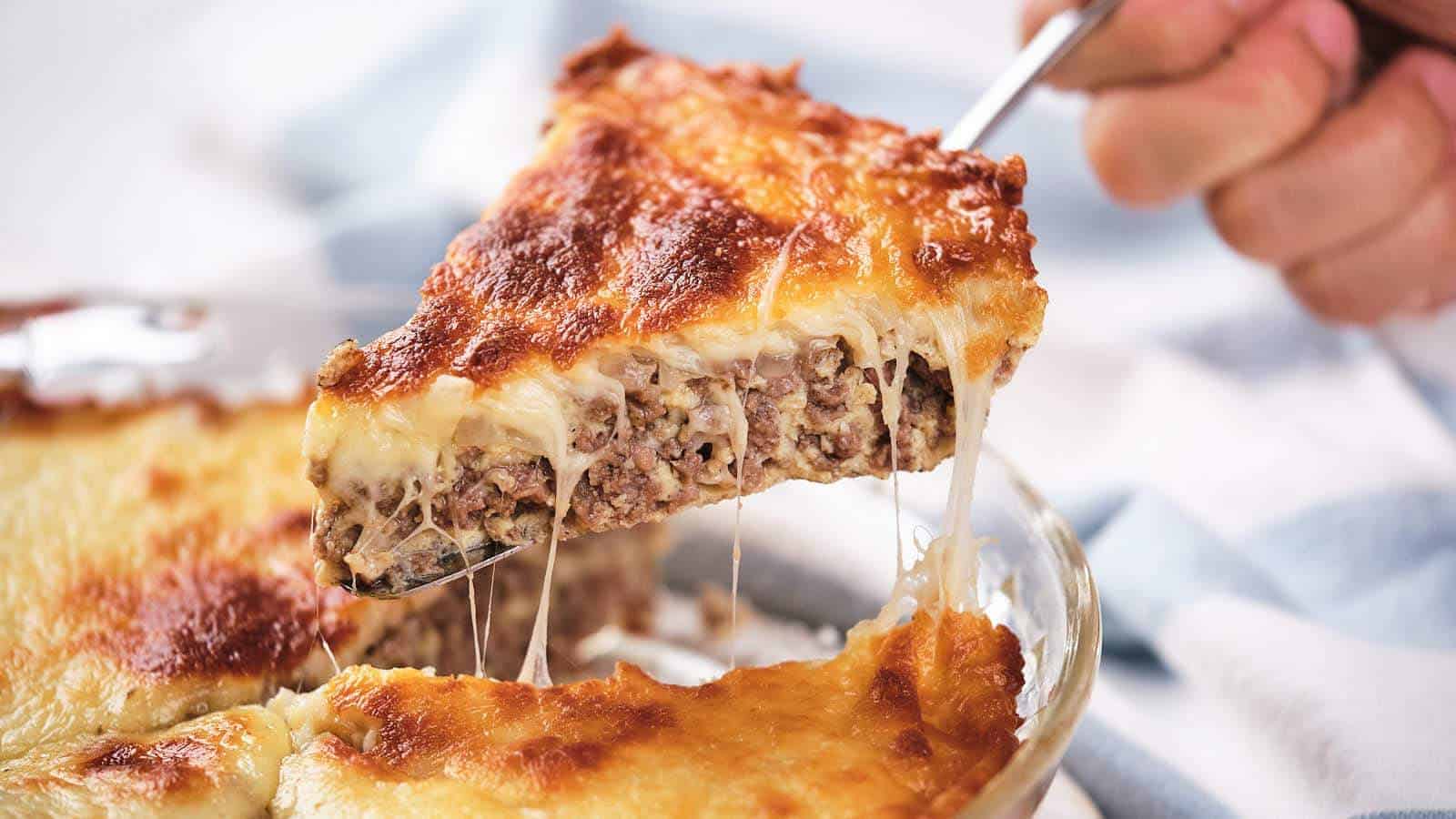
Papeton d’Aubergine.
Aubergines/eggplants in the manner of the Pope’s Hat.
Photograph
courtesy of Cuisine Actuelle
Papeton d’Aubergine originated in Avignon and is served a pate,
as an entrée (the French starter). Apart from eggplant, most French recipes
include tomatoes, onions, and eggs flavored with garlic, parsley, thyme, and bay leaves. (Avignon was
home to seven popes from 1309 to 1379. The area around Avignon that the popes
ruled was called Comtat Venaissin).

Papeton d’Aubergine
Photographcourtesy of Cuisine Actuelle.
Over the years, chefs have adjusted the Papeton
recipe, with some claiming the original version used corn (USA maize) and not
eggplant. I tend to doubt the use of corn as it arrived in Avignon about one
hundred years after Columbus returned from the Americas, and by then, the popes
had left the city! Despite the possible historical confusion when I have
ordered Papeton d’Aubergines, all my memories of the dish have been good ones.
Nevertheless, there are now more claimants for the authentic recipe than there
were popes who ruled from Avignon.

Avignon
Photograph
courtesy of jean-louis Zimmermann
https://www.flickr.com/photos/jeanlouis_zimmermann/5031941811/
Where
did the eggplant, the aubergine, come from?
The eggplant came from somewhere in Asia, with China being the first
country known to have cultivated the plant. How and when the eggplant arrived
in Europe is not very clear, and while the usual suspects, the Ancient Greeks,
and Romans, who both have long histories tying them to France, have any recipes
that include eggplants. Epicurious’s online magazine (Condé Nast) focuses on
food and cooking-related topics and suggests that the eggplant came to
Europe from India sometime around the eighth century, possibly
with seeds carried by Jewish merchants. (Epicurious’s recipe includes cheese, an
addition not usually seen in France).

Eggplants/Aubergines
Photograph
courtesy of Håvar og Solveig
https://www.flickr.com/photos/seenful/3826712768/
Where is Avignon
The city of Avignon is in the prefecture, the regional capital
of the department of Vaucluse in the region of Provence-Alpes-Côte d’Azur. The
region of Provence-Alpes-Côte d’Azur includes about half of France’s
Mediterranean coast from the Camargue to the
Italian Mediterranean border. Avignon is just 40 km (25 miles) from the city of
Arles, which borders the Camargue. Nimes is 45 km (28 miles) from Avignon
and Saint-Rémy-de-Provence is 25 Km (15 miles) while Nice is 270 km ( 168
miles).
The tourist information office of Avignon has an English-language website:
https://avignon-tourisme.com/en/

Find Avignon on the map.
Photograph copyright Google.
You
may wonder what the Popes of Rome were doing in Avignon.
Historically, a disagreement between King Philip IV of France
and the papacy created the background for change, but it was the refusal of
Pope Clement V in 1305 to move to Rome when he was elected pope that caused a
breach in the church. Clement V ruled the Roman Catholic world from Avignon;
then the capital of a Papal State called Comtat Venaissin, with its capital in
Avignon, as did another six popes. However, it is impossible to be sure that
the Avignon popes ever tasted any version of Papeton d’Aubergines. (Comtat
Venaissin had become a papal territory in 1274 and only returned to France with
the French Revolution).
The
wine called Châteauneuf-du-Pape

Châteauneuf-du-Pape 2009
From the winerery named after Pierre Le Roy de Boiseaumarié
Photograph
courtesy of Jameson Fink
https://www.flickr.com/photos/jamesonfink/5593290096/
While the popes were in Avignon, they enjoyed
fine wines and influenced the growth of the vineyards around the summer palace
they were building. The results are the
often outstanding red and white wines called Châteauneuf-du-Pape. The wine comes
from grapes that grow near the village of
Châteauneuf-du-Pape, where the popes had built their summer palace, 12
km (7 miles) from Avignon. This specific appellation produces more wine than
the whole of the Northern Rhone region. That’s what you call a popular wine!
Much of the investment in the local wine industry owes its growth to the popes
of Avignon.

The
village of Châteauneuf-du-Pape
and
the remains of part of the castle’s keep.
Photograph courtesy of Cycletours Holidays
https://www.flickr.com/photos/cycletours_holidays/50293529717/
Châteauneuf-du-Pape
set the AOC/AOP standard.
In the early 20th century, Châteauneuf-du-Pape was a
much-appreciated wine, but it was plagued by wine fraud, with bottles from
anywhere being labeled Châteauneuf-du-Pape. The anger and concern of the
tricked public and the real vintners saw the first wine regulations produced,
especially for Châteauneuf-du-Pape in 1923. Those rules provided the prototype
for the subsequent AOC rules and became law in 1933. In 1936
Châteauneuf-du-Pape became the first wine to receive an AOC. A local vintner
Pierre Le Roy de Boiseaumarié, (1890-1967) of Château Fortia, was the principal
architect of these early regulations as well as the future AOC and AOP regulations.
The rules that include a minimum alcohol level for wines and limits on yields
as well as the types of grapes can be grown.
For Châteauneuf-du-Pape, both a red and a white wine are
allowed. Still, unlike the case with other appellations, the permitted grape
varieties are not differentiated into principal and accessory varieties. So.
theoretically, it is possible to produce varietal Châteauneuf-du-Pape from any
one of the eighteen grapes allowed. In reality, most red Châteauneuf-du-Pape
wines are blends dominated by Grenache, though the taste from different producers
can vary. When you have found a Châteauneuf-du-Pape that you like, stay with
that vintner. Only one of every 16 bottles of Châteauneuf-du-Pape is a white
wine. Châteauneuf-du-Pape wines have high alcohol levels, typically 13-15%, and
they must naturally be at least 12.5%.
La
Truffe du Mont Ventoux et du Comtat Venaissin
The black truffle found in the department of Vaucluse.
A truffle is a subterranean fungus. Truffles are appreciated for the way they
accentuate the flavor of other foods, The best way to enjoy truffles is when
they are served raw and shaved over warm foods that are not highly flavored.
Truffle oil, if it is genuine, is made with truffles steeped in oil, usually
olive oil.

Black Truffle Pasta
Photograph
courtesy Cooking with Kerry
The black truffles of Mont Ventoux and the Comtat Venaissin are
the tuber melanosporum. The same truffle as the Perigord Truffle, the black diamond,
France’s most famous and most expensive truffle. If you are visiting the area
in the winter, there are several truffle markets that you can visit. The
earliest truffle market of the year is in the town of Carpentras is 26 km (16
miles) from Avignon (from mid-November to mid-March, early on Friday mornings).

Toasts au Truffes
Black truffles on toast.
Photograph
courtesy of J’MC
Œufs Brouillés aux Truffe Noir:
Œufs Brouillés
aux Truffe Noir are scrambled eggs, with the black truffles. A brouillade is a
light version of scrambled eggs that originated in Provence. The egg whites are
beaten separately and only then mixed with the yolks; that provides a light and
delicate form of scrambled eggs. I have tried this three times, and only once
could I taste and enjoy the change that truffles make; then, the truffles were
grated in front of me. The other times, the dishes had no truffle taste, just a
few black dots and a hint of garlic, and that was it. Make sure that when you
order black truffle dishes, the truffles are grated in front of you! NB: Truffles, like virgin olive oils, lose
their taste when cooked.

The flag of the Confrerie
of the Vaucluse
truffle.
Photograph
courtesy of vpagnouf
https://www.flickr.com/photos/vpagnier/13348834865/
This Confrérie whos flag is
shown above are a Brotherhood and Sisterhood, who work to protect and promote
the good name of the truffle from Vaucluse and have the Comtat Venaissin
insignia on their flag.
The black truffle – the Tuber Melanosporum, the Truffe du Mont
Ventoux, the Truffe du Comtat Venaissin, and the Truffe du Périgord in the
languages of France’s neighbors:
(Catalan
– tòfona negra), (Dutch – zwarte truffel
), (German – Perigord-Trüffel, Schwarze
Trüffel), (Italian – tartufo nero),
(Spanish – trufa negra), ( Latin – trufa negra).
The Aubergine or Eggplant in the languages of
France’s neighbors:
(Catalan – albergínia), (Dutch
– eggplant), (German – aubergine ), (Italian – melanzana), (Spanish
– berenjena), (Latin – solanum melongena).
——————
Searching for the meaning of words, names or phrases
on
a French menu?
Just add the word, words, or phrase that you are searching for to
the words “Behind the French Menu” (best when including the inverted
commas), and search with Google. Behind the French Menu’s links, include
hundreds of words, names, and phrases that are seen on French menus. There are
over 450 posts that include over 4,000 French dishes with English
translations and explanations.
————-
Behind the French Menu
by
Bryan G. Newman
behindthefrenchmenu@gmail.com
Copyright 2010, 2022, 2023
——————–
Connected Posts:
AOP,
IGP and Vin de France. What are These New Wine Labels?Ail
– Garlic. Garlic in French Cuisine.Confréries
– The Brother and Sisterhoods that Promote and Defend the Foods and Wines of
France.Feuille
de Laurier – The Bay Leaf, the Laurel Leaf and the Bay Leaf in French Cuisine.La
Truffe de Périgord, la Truffe Noire – The Perigord Truffle, the Black Truffle
in French Cuisine.Persil
– Parsley. Parsley in French Cuisine.Salade
Mesclun – Salad Mesclun in French CuisineThe
Camargue, France. The Land, its People, its Produce and its Cuisine.





Post Comment