The Sheet Pan Latkes Hack I Wish I Knew Earlier


Easy sheet pan latkes for busy candle lighting nights, inspired by Adeena Sussman, with toppings that travel from deli style to dessert.

Jump to:
This whole sheet pan latkes adventure began with a scroll through Instagram while Leo and Lin chased each other around the coffee table and my husband tried to keep wax from dripping onto the tablecloth.
My thumb stopped on a video from Adeena Sussman, one of my favorite Jewish cookbook authors. She lives in Tel Aviv now, and so much of her work carries that easy market energy I miss from my years there.
In the video, she pulled a single golden sheet of latkes from the oven, edges frilled, center pale and tender, then sliced it into neat squares for a latke board. Her sheet pan latkes had gone viral for a reason.
I watched it twice, then tracked the recipe down on her site. In her sheet pan latke board, she describes it as a thin kugel-style slab, baked in one pan and topped with gravlax, labneh, jam, little spoons of fish roe, and more. It felt completely new and completely familiar. Like the pan-fragrant Hanukkahs of my childhood moved into an adult Tel Aviv kitchen.

Adeena’s work has been a quiet teacher in my kitchen for years. Her cookbook Sababa, with its bright Israeli flavors, lives on the shelf I reach for most, splattered with oil, tahini, and little fingerprints from the kids. I flip through it when I want to remember Shuk HaCarmel, trays of halvah, and Israeli food that feels both rooted and endlessly curious.
So when Adeena shared two new versions of sheet pan latkes on Instagram this year, I knew I wanted a pan of my own. I kept her ratio of potatoes, onion, and eggs, but shaped it around our life: a slightly lower oven heat, olive oil for that Mediterranean note, and toppings that match our Hanukkah table.
Toppings For Sheet Pan Latkes, From Classic To Dessert

Part of the joy of sheet pan latkes is treating the whole thing like a board. Instead of topping pancakes one by one at the stove, you set the golden sheet in the center of the table and surround it with small bowls. Guests, kids, and tired parents can all build their own bite without waiting for the next batch to come out of the pan.
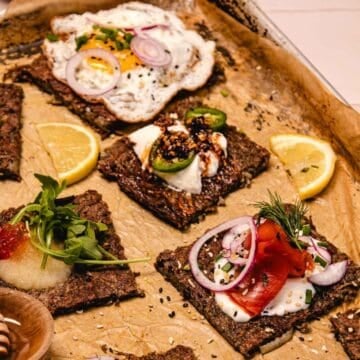
On busy Hanukkah nights, I lean on toppings that already live in our fridge or on other boards. A spoonful of sour cream, a streak of pepper jelly, and a sprinkle of everything bagel seasoning gives one square a deli-style personality. Labneh with chives and thinly sliced onion feels like a cousin to my labneh dip with olives, and works beautifully with sharp pickled onions or briny capers.
For something brighter, applesauce with a small handful of arugula and a tiny line of pepper jelly brings sweet, tart, and gentle heat together. Fried eggs with chives turn the squares into breakfast-for-dinner, especially if you set them beside Aruk, Iraqi style latkes, so the table shows different Jewish potato traditions at once.

This batch stayed firmly in the savory lane. In my head, though, dessert sheet pan latkes are waiting their turn. One corner brushed with honey or silan, drizzled with dark chocolate, and showered with halva crumbles. Small scoops of vegan halva tahini ice cream are served alongside for those who love sesame sweets.
Savory or sweet, this sheet pan is an easy canvas. Put out what you have. Add one or two special toppings, and let everyone at the table discover their own favorite forkful.
Ingredients

- Potatoes – Russet potatoes are the heart of these sheet pan latkes. Their high starch content helps the mixture hold together and turn deeply crisp at the edges while staying tender inside. I like to scrub them well and leave the skin on. Yukon Gold potatoes also work if that is what you have. They make slightly creamier potato latkes, though they crisp a bit less.
- Onion – Onion gives the latkes their familiar Hanukkah smell and gentle bite. I usually use yellow onion, though white onion or even a mild red onion can step in if needed.
- Potato Starch, Cornstarch, or Flour – A spoonful or two of starch is my insurance for crisp edges and clean slices. Potato starch keeps the recipe gluten free and gives a light, shattering crunch that my kids love along the corners. Cornstarch works almost the same way and is easy to keep in the pantry. All-purpose flour is the most traditional choice and makes a slightly softer, more pancake-like sheet. I reach for whichever is already open, and the recipe behaves kindly with all three.
See the recipe card for full list and exact quantities.
How to Make Sheet Pan Latkes Recipe

If you are used to standing over the stove flipping potato pancakes one by one, this sheet pan latke recipe feels like a small gift. It keeps the same crispy edges and soft centers, but is easy to prepare and adapts to whatever toppings you love. Here is what to look for at each step so your latke sheet comes out deeply golden and ready for the table:
Prep the Pan


You want the paper glistening, not swimming in oil. Too little oil and the bottom will stick; too much and the potatoes can feel heavy rather than crisp.
Grate and Drain the Potatoes

The shreds should be long and even, like hash browns, not mushy. Pile everything into a clean kitchen towel, gather the corners, and twist over the sink. Keep twisting until your hands feel tired and almost no liquid drips out. The mixture should feel light and slightly fluffy, not soggy. If you skip this step or stop too early, the latke sheet can bake up pale and soft instead of deeply golden.
Mix the Latke Batter

Use your hands or a sturdy spoon to mix until every shred glistens lightly and clumps together when pressed. The mixture should feel cohesive but not wet. If it looks chalky or dry, add a small extra splash of beaten egg. If it feels loose and puddly, sprinkle in a tiny bit more starch. This is where you can taste a strand or two and adjust the salt before baking.
Spread Into a Thin, Even Layer


You should not see big hills or bare patches of parchment. Press down gently with your hands or a spatula so everything makes good contact with the oiled paper. If the layer is too thick, the center can stay heavy and never fully crisp.
Bake Until Deeply Golden

You are looking for very crisp, frilled edges that are a deep golden brown and a center that is set and lightly bronzed. If the edges are dark but the center still looks pale and raw, lower the rack one notch and give it a few more minutes. If you smell any hint of burning, check right away and tent the very edges with a thin strip of foil.
Rest, Slice, and Top

This short pause helps the starches set so the pieces slice cleanly instead of tearing. You should see the surface firm up slightly as it cools. If any edges cling to the parchment, slide a thin spatula underneath to loosen them. Transfer to a board or platter and bring out your toppings so everyone can build their own favorite square while the latkes are still hot and crisp.
Storage

Once the sheet pan latkes cool, transfer squares to an airtight container, layering parchment between stacks. Refrigerate for 3–4 days and store toppings separately. For same-day serving, keep plain latkes loosely covered at room temperature, then re-crisp in a hot oven.

To reheat, bake on a parchment-lined sheet at 400°F for 8–10 minutes, or use an air fryer until hot and crisp; avoid the microwave, which softens them. For longer storage, freeze in a single layer, then move to a container with parchment between pieces. Freeze up to 1 month and reheat from frozen at 425°F.
Top Tips
Mind the Potatoes’ Color – grated potatoes start to darken quickly if they sit around. When I grate by hand with both kids “helping,” I work in small batches and squeeze them right away. If you need to pause, keep the grated potatoes in a bowl of cold water. Then drain and squeeze very well before mixing with the eggs and starch.
Plan for Make-Ahead Nights – on busy Hanukkah evenings, I bake the sheet earlier in the day until lightly golden, cool it, then give it a second bake right before serving. The second time in the oven deepens the color and crisps the top while I focus on toppings and candle lighting. It feels a bit like having store-bought help, only it still tastes like something that came from your own kitchen.
Recipe
Tried and loved this recipe? Please leave a 5-star review below! Your reviews mean a lot to me, so if you’ve got any questions, please let me know in a comment.
Sheet Pan Latkes
Baked sheet pan latkes that feed a crowd, with golden edges and endless topping ideas for Hanukkah or brunch
Prevent your screen from going to sleep
Ingredients
- 1½–1¾ lbs Russet potatoes scrubbed, skin on if you like
- 1 medium–large onion peeled
- 2 eggs
- 2 teaspoon kosher salt plus more to taste
- ½ teaspoon freshly cracked black pepper
- 3–4 tablespoon potato starch cornstarch, or all-purpose flour
- ¼–⅓ cup olive oil
Serving Suggestions
- sour cream, jalapeno, pepper jelly, everything bagel seasoning, Labneh, chives, onions, applesauce, arugula, pepper jelly, onions, dill, salmon, chives, fried egg, sour cream, cucumbers
Instructions
-
Preheat the oven to 425°F (220°C). Line a large sheet pan with parchment paper. Drizzle a thin layer of olive oil over the parchment and spread it so the surface looks lightly glossy. This helps the bottom crisp and keeps the latkes from sticking.
-
Using the large holes of a box grater or a food processor, grate the potatoes and onion. You want long, even shreds, not a paste. If the mixture looks very watery already, move quickly to the next step so it does not darken too much.
-
Pile the grated potatoes and onion into a clean kitchen towel. Gather the corners, hold it over the sink, and twist firmly. Keep twisting until very little liquid drips out and the shreds feel light and almost dry. This step is key for a crisp, not stodgy, sheet.
-
Transfer the squeezed potatoes and onion to a large bowl. Add the eggs, kosher salt, black pepper, and potato starch (or cornstarch or flour). Mix well until every strand is coated and the mixture holds together when you press a handful. If it feels loose and wet, sprinkle in a bit more starch; if it feels too stiff, add a spoonful of beaten egg.
-
Scoop the mixture onto the prepared sheet pan and spread it out all the way to the edges. Aim for a thin, even layer, similar to a thick hash brown. Press down gently with your hands or a spatula so there are no tall mounds and everything makes good contact with the pan. Drizzle the remaining olive oil over the top in a thin zigzag.
-
Bake for 35–45 minutes, rotating the pan halfway through. The latkes are ready when the edges are deeply golden and very crisp, and the center looks set and lightly browned. If the edges darken too quickly while the center is still pale, move the pan to a higher rack.
-
Let the sheet rest for about 5 minutes so it firms up slightly. Use a sharp knife or pizza cutter to slice into squares or rectangles. Lift pieces with a spatula and serve hot with your favorite toppings, from sour cream and applesauce to labneh, salmon, or fried eggs.
Nutrition
Calories: 87kcalCarbohydrates: 6gProtein: 2gFat: 6gSaturated Fat: 1gPolyunsaturated Fat: 1gMonounsaturated Fat: 4gTrans Fat: 0.003gCholesterol: 33mgSodium: 480mgPotassium: 131mgFiber: 0.4gSugar: 0.3gVitamin A: 48IUVitamin C: 1mgCalcium: 10mgIron: 0.4mg
Measuring Cups and Spoons

Post Comment